Top Navy Contract Opportunities to Watch in 2026

As the U.S. Navy continues to modernize and maintain mission-critical systems, 2026 presents a wave of new contract opportunities for suppliers, manufacturers, and service providers. From submarine warfare upgrades to museum development and strategic science & tech investments, these Navy contracts reflect diverse and impactful work across platforms.

OppyHound has reviewed the latest open solicitations and notices to bring you a shortlist of standout Navy opportunities for 2026.

Technology Insertion Hardware (TIH) 28/30/32 

Agency: Naval Undersea Warfare Center
SAM ID: N0025326R7001
NAICS Code: 334511
Location: Keyport, WA
Offers Due: 03/09/2026

This competitive IDIQ contract supports the U.S. Navy’s Submarine Warfare Federated Tactical System (SWFTS). It covers development, integration, and production of Technology Insertion Hardware (TIH) — hardware that ensures U.S. and allied submarine systems remain interoperable and up to date.  

The Government intends to award a single Indefinite Delivery/Indefinite Quantity (IDIQ) contract with a nine-year ordering period. The contract will include a mix of Fixed-Price Incentive (FPIF); Cost-Plus-Incentive-Fee (CPIF); Cost-Plus-Fixed-Fee (CPFF); and Cost-Reimbursable CLINs.  

Offerors must use revised attachments in their proposals and submit them through the PIEE Solicitation Module. A DD 2345 form and E-TIC access are required due to export-controlled content. 

 Ideal for: Defense integrators with secure facilities, SWFTS experience, and multinational system delivery capabilities. 

Long Range Broad Agency Announcementfor Navy & Marine Corps Science & Technology 

Agency: Office of Naval Research
SAM ID: N0001425SB001
NAICS Code: 541715
Location: Arlington, VA
Offers Due: 09/30/2026 

The ONR’s FY25 BAA seeks proposals for science and technology efforts with the potential to transform future Navy and Marine Corps capabilities. This includes fundamental research, applied R&D, and tech transitions across a broad range of disciplines: autonomy, sensors, cyber defense, unmanned systems, advanced manufacturing, energy, human performance, and more. 

The BAA is open to academic institutions, nonprofits, large businesses, and global R&D firms. It allows for white papers and full proposals throughout the fiscal year and is updated regularly with amendments. 

Ideal for: Research labs, academic institutions, and innovation-driven companies aiming to shape future naval tech. 

 BEARING, SHAFT, TURBINE – Repair Contract

Agency: NAVSUP Weapon Systems Support Mech
SAM ID: N0010425QCC62
NAICS Code: 333611
Location: Mechanicsburg, PA
Offers Due: 03/13/2026 

This solicitation seeks repair services for turbine shaft bearings used in naval propulsion systems. The contract requires contractors to follow detailed inspection, testing, and reporting standards. It includes 210-day Repair Turnaround Time (RTAT), government inspection requirements, and full compliance with Commercial Asset Visibility (CAV) standards. 

Contractors must verify part specs, submit accurate repair documentation, and be prepared for price reductions in the event of late delivery. It is issued under Emergency Acquisition Flexibilities (EAF) to streamline timelines. 

Ideal for: Certified mechanical repair providers with experience in turbine components and Navy logistics compliance. 

Ready to Bid?  

OppyHound users can obtain and assess, through running a deep dive report and/or asking the documents questions, solicitation documents, attachments, and submission instructions. Sign up for free on OppyHound and unlock full access to these and hundreds of other navy contracting opportunities. 

  • Full Navy and DoD contract listings for 2026 
  • Alerts for relevant opportunities in your industry 
  • Smart filters by NAICS, PSC, set-aside status, and more 

Create your free OppyHound account and be the first to bid on upcoming Navy contracts. 

The Essential Guide to Set-Aside Programs [2026]

Did you know set-aside programs make the federal government reserve over $178 billion in contracting opportunities exclusively for small businesses each year? That’s right; the government must allocate 23% of its contracting budget specifically for small businesses. 

Set aside programs for minorities, women-owned businesses, and service-disabled veterans create pathways to access federal marketplace. The government targets 5% for Small Disadvantaged Businesses (8(a)), 5% for Women-Owned Small Businesses (WOSB), 3% for Service-Disabled Veteran-Owned Small Businesses (SDVOSB), and 3% for HUBZone businesses. 

Furthermore, significant changes took effect on October 1, 2025, with new thresholds set at $8.5 million for manufacturing and $5 million for other industries. However, many qualified businesses have missed these opportunities simply because they did not fully understand how to navigate the system effectively. 

This guide will walk you through everything you need to know about SBA set aside programs in 2026, from qualification requirements to application processes, ensuring you’re positioned to compete for your share of these lucrative contracts. 

What Are Set-Aside Programs and Why They Exist 

Set-aside programs are federal contracts exclusively reserved for small businesses to compete without the pressure of facing larger corporations. These programs serve as a cornerstone of federal procurement policy, designed to ensure small businesses get their share. 

Leveling the playing field for small businesses 

Small businesses often struggle to secure government contracts when competing against industry giants with vastly greater resources. Set-aside programs address this imbalance by reserving specific contracts solely for small business participation. 

Every federal government purchase between the micro-purchase threshold ($15K) and the simplified acquisition threshold ($35K)) is automatically set aside for small businesses, provided at least two companies can provide the product or service at a fair price. This rule creates a protected space where small businesses can build crucial relationships with federal agencies while establishing a track record of successful contract fulfillment. 

Moreover, these programs offer a vital entry point for businesses that might otherwise be excluded from lucrative government opportunities. Rather than being overshadowed by large corporations, small businesses can showcase their capabilities, expand revenue streams, and gain stability through consistent federal work. 

How federal set-aside programs support economic inclusion 

Beyond supporting small businesses generally, set-aside programs actively promote economic inclusion through targeted assistance to underrepresented groups. The government has established formal goals to ensure contracts reach diverse business owners: 

  • 13% of federal contracting dollars are currently targeted for Small Disadvantaged Businesses (SDBs) through the 8(a) Business Development Program 
  • 5% of federal contracting dollars are targeted for Women-Owned Small Businesses (WOSBs). 
  • 3% of federal contracting dollars are allocated for Service-Disabled Veteran-Owned Small Businesses (SDVOSBs). 
  • Another 3% is designated for HUBZone businesses in historically underutilized business zones 

 Through these structured goals, federal set-aside programs create meaningful opportunities for socially and economically disadvantaged individuals while simultaneously strengthening the overall small business sector.  

Overview of Major Set-Aside Programs 

Let’s break down the four most widely used small business certification programs : 

Program  Target Group  Key Benefit 
WOSB/EDWOSB  Women-owned small businesses  Access to women-only set-asides, sole-source awards in select NAICS codes 
HUBZone  Businesses in historically underutilized areas  Competitive edge in place-based contracting 
8(a)  Socially and economically disadvantaged businesses  9-year program with mentoring and sole-source eligibility 
SDVOSB  Service-disabled veteran-owned small businesses  Set-asides and prime contracting preference in defense agencies 


  1. Women-Owned Small Business (WOSB/EDWOSB)

What it is:
Designed to help women entrepreneurs compete in industries where they’ve been historically underrepresented. 

Eligibility: 

  • At least 51% owned and controlled by one or more women 
  • Must be small under SBA size standards (by NAICS codes) 
  • For EDWOSB: women must also meet economic disadvantage criteria 

Benefits: 

  • Access to set-aside contracts in over 300 NAICS codes 
  • Sole-source contracts up to $5M ($8.5M for manufacturing) 
  • Reduced competition in WOSB-focused industries 

How to Apply: 

Pro Tip: Use OppyHound to filter opportunities by WOSB set-aside type and target relevant agencies. 

  1. HUBZone Program

What it is:
Incentivizes businesses located in economically distressed areas (HUBZones) to participate in federal procurement. 

Eligibility: 

  • Principal office must be in a designated HUBZone 
  • 35% of employees must reside in a HUBZone 
  • Must be 51% owned by U.S. citizens, a Community Development Corporation, an agricultural cooperative, an Alaska Native corporation, a Native Hawaiian organization, or an Indian tribe 

Benefits: 

  • 3% of all federal contracts are reserved for HUBZone firms 
  • 10% price evaluation preference in full and open competition 
  • Long-term contract visibility 

How to Apply: 

  1. SBA 8(a) Business Development Program

What it is:
Supports businesses owned by socially and economically disadvantaged individuals with long-term contracting support. 

Eligibility: 

  • Be at least 51% owned and controlled by U.S. citizens who are socially and economically disadvantaged 
  • Personal net worth < $850,000; income < $400,000; assets < $6.5M 
  • Demonstrated good character and potential for success 

Benefits: 

  • Eligibility for sole-source awards 
  • Business mentoring through SBA’s Mentor-Protégé program 
  • Reserved contracts and joint venture opportunities 

Program Length:
9 years (4 years developmental + 5 years transitional) 

How to Apply:
Apply via SBA’s Certify portal; thorough documentation required 

  1. Service-Disabled Veteran-Owned Small Business (SDVOSB)

What it is:
Supports veterans with service-connected disabilities in gaining federal contracts. 

Eligibility: 

  • 51% owned and controlled by one or more service-disabled veterans 
  • Located and operated within the state 
  • Daily business operations and long-term decisions must be veteran-controlled 
  • Must be verified through SBA (formerly through VA CVE) 

Benefits: 

  • Sole-source and set-aside opportunities, especially with DoD and VA 
  • Prime and subcontracting opportunities 

How to Apply: 

 In 2025, the federal government allocates specific percentages of contracting dollars across multiple set-aside programs, each designed to support different underrepresented business categories. 

Understanding Set-Aside Thresholds and Rules 

Federal contracting opportunities follow specific dollar-value thresholds that determine how set-aside programs are applied. Understanding these thresholds is essential for navigating the procurement process successfully. 

Micro-purchase threshold: Up to $15,000 

The MPT is the maximum value for the smallest category of federal government acquisitions, allowing purchases without competitive quotes if pricing is deemed reasonable. 

As of October 1, 2025, the MPT stands at $15,000 for standard purchases (up from $10,000), with higher limits of $25,000 for U.S.-based contingency operations and $40,000 for those outside the U.S. These apply under FAR Subpart 13.2 and government buyers can directly award contracts to vendors using purchase cards (like a government-issued credit card). 

These purchases enable quick procurements and often benefit small businesses that offer readily available goods or services. 

Simplified Acquisition Threshold: Between $15,000 -$350,000 

For contracts valued between $15,000 and $350,000, agencies use simplified procedures, and the rules require small business set-asides exclusively if the contracting officer finds no reasonable expectations of receiving offers from at least two responsible small businesses that are competitive in terms of price, quality, and delivery. 

This range often triggers the “automatic set-aside” process under the Rule of Two, designed to ensure small businesses receive their fair share of federal contracts. 

Above Simplified Acquisition Threshold:  Above $350,000  

When contract values exceed $350,000, the contracting officer must still set aside the acquisition for small businesses if there’s a reasonable expectation that offers will be obtained from at least two responsible small businesses and the award will be made at fair market prices. This is known as  “Rule of Two.”  

Importantly, for procurements above the SAT, contracting officers must first consider socioeconomic programs (8(a), HUBZone, SDVOSB, and WOSB) before general small business set-asides.

Subcontracting plans for large businesses 

Large businesses bidding on federal contracts exceeding $750,000 (or $1.5 million for construction) must submit subcontracting plans outlining how they will meet the government’s small business subcontracting goals. These plans must include specific goals for small, disadvantaged businesses, veteran-owned small businesses, HUBZone businesses, and women-owned small businesses. Companies must demonstrate a firm commitment to meeting these goals throughout the contract term and regularly report progress through the Electronic Subcontracting Reporting System (eSRS). 

How to Qualify and Compete for Set-Aside Contracts 

Winning federal set-aside contracts requires careful preparation and understanding of the qualification process. Here’s how to position your business for success: 

Registering in SAM.gov 

First, register your business in the System for Award Management (SAM.gov) to obtain a Unique Entity ID. This registration must be renewed every 365 days to remain active. The process typically takes up to 10 business days to complete. For free assistance, contact your local APEX Accelerators (formerly PTACs). 

Meeting SBA size standards 

Size standards vary by industry and are based on either employee count or annual receipts. Check if your business qualifies using SBA’s size standards tool. Remember to include all affiliates when calculating your size. Your business must also be for-profit, independently owned, not nationally dominant, and physically located in the U.S. 

Getting certified for specific programs 

For the 8(a) program, businesses must be at least 51% owned by socially and economically disadvantaged U.S. citizens with personal net worth under $850,000. Women-Owned Small Businesses require 51% ownership by women. Service-Disabled Veteran-Owned businesses need verification through SBA’s certification program. 

Responding to Sources Sought and RFIs 

It is important that all small businesses respond to sources sought and requests for information (RFI). These market research tools influence potential set-aside determinations. Your response showcases your capabilities and helps agencies determine if small businesses can fulfill requirements. Always meet submission deadlines. 

Avoiding common mistakes 

Common mistakes include inadequate SAM registration, misclassifying NAICS codes, and submitting weak capability statements. Also avoid overlooking compliance requirements and preparing poor proposals. 

Use OppyHound to Find Set-Aside Opportunities 

OppyHound makes it easier to discover contracts aligned with your certification. With advanced filters, real-time alerts, and AI-powered analysis, you can: 

  • Search by set-aside type (e.g., WOSB, 8a, HUBZone) 
  • See which agencies award the most contracts under each program 
  • Monitor recompetes and task orders tied to certifications 
  • Analyze RFPs to extract compliance and eligibility details in minutes 

Ready to target more relevant contracts? Start your free OppyHound trial today. 

Key Takeaways 

 The federal government reserves over $178 billion annually through set-aside programs, creating massive opportunities for qualifying small businesses to compete without facing large corporations. 

  • Register in SAM.gov andmaintainSBA size standards to access simplified acquisition threshold automatic set-asides for contracts $15,000-$350,000  
  • Target specific programs: 8(a) for disadvantaged businesses, WOSB for women-owned firms, SDVOSB for veteran-owned companies 
  • New thresholds of $8.5M manufacturing/$5M other industries take effect October 2025 
  • Respond to Sources Sought notices to influence set-aside determinations andshowcaseyour capabilities  
  • Avoid common mistakes: inadequate SAM registration, wrong NAICS codes, and weak capability statements

With 23% of federal contracting dollars reserved for small businesses and specialized goals for underrepresented groups, these programs provide a structured pathway to federal revenue. Success requires proper certification, active registration maintenance, and strategic positioning, but the $178 billion opportunity makes the effort worthwhile for qualifying businesses. 

FAQs 

Q1. What are set-aside programs and how do they benefit small businesses?  

Set-aside programs are federal contracts reserved exclusively for small businesses to compete without facing larger corporations. They help level the playing field by allocating a portion of government spending to small businesses, providing them with opportunities to secure lucrative contracts and grow their operations. 

Q2. How can a business qualify for set-aside programs?  

To qualify for set-aside programs, a business must first meet the SBA size standards for its specific industry. Additionally, it needs to register in SAM.gov, obtain necessary certifications for specific programs (e.g., 8(a), WOSB, SDVOSB), and ensure it meets all eligibility criteria for the targeted set-aside category. 

Q3. What are the different types of set-aside programs available?  

The main types of set-aside programs include general small business set-asides, 8(a) Business Development Program for socially and economically disadvantaged individuals, Women-Owned Small Business (WOSB) program, Service-Disabled Veteran-Owned Small Business (SDVOSB) program, and the Historically Underutilized Business Zone (HUBZone) program. 

Q4. How can businesses improve their chances of winning set-aside contracts?  

To improve chances of winning set-aside contracts, businesses should maintain an active SAM.gov registration, respond to Sources Sought notices and RFIs, prepare strong capability statements, ensure compliance with all program requirements, and avoid common mistakes such as misclassifying NAICS codes or submitting weak proposals. 

New Military Contracts for Bid in 2026

As we move into 2026, the Department of Defense (DoD) continues to roll out high-impact contracts that offer businesses a chance to support some of the most vital missions in national security. From naval weapon systems to nuclear command aircraft and defense R&D commercialization, the military procurement ecosystem is bustling with new opportunities. 

OppyHound has filtered through hundreds of active solicitations to bring you a curated list of current, military-relevant contracts that are open for bidding. Below are key highlights you can act on right now: 

E-4B National and Nuclear Communication Support (N2CS)

Department/Ind. Agency: Department of defense 

Sub-tier: Department of the air force 

SAM ID: FA813425RB004 

Location: Tinker AFB, OK 

NAICS Code: 336413 

Offers Due: 09/16/2026 

This massive ID/IQ contract (up to $984 million) supports the sustainment and modernization of the E-4B fleet, also known as the “Doomsday Plane.” These aircraft are central to national nuclear command and control, ensuring continuity of government in emergency situations. Work includes communications systems engineering, cybersecurity, software modernization, and more. It has an ordering period of up to 10 years with the last order ending 18 months after the last option is exercised in accordance with FAR 52.217-8, if needed.  

Ideal for: Defense contractors with C4ISR, cybersecurity, or aviation support capabilities. 

Important Note: To obtain a copy of the draft RFP documents, the government requires the submission of an approved DD 2345.

DARPA Commercial Solutions Opening (DCSO)

Department/Ind. Agency: Department of defense 

Subtier: Defense Advanced Research Projects Agency (DARPA) 

SAM ID: HR001125RE003 

Location: Arlington, VA 

NAICS Code: 541 

Offers Due: 04/30/2026 

DARPA’s DCSO is a gateway for commercial entities to transition DARPA-funded innovations into practical military use. Whether your firm specializes in AI, robotics, autonomy, cybersecurity, or novel hardware platforms, this opening is designed to facilitate commercialization and market integration. 

Ideal for: Startups and SBIR/STTR performers with disruptive technology.  The administration is putting emphasis on speeding up acquisition through CSO and Other Than Transaction Authority (OTA) actions. This CSO is essential for innovative small businesses. 

Weapon Control Component Repair

Agency: Department of the Navy (NAVSUP) 

SAM ID: N0010426QQA41 

Location: Mechanicsburg, PA 

Offers Due: 05/05/2026 

This solicitation focuses on the repair of critical weapon control hardware for naval systems. With CMMC compliance and DPAS priority rating, this contract highlights the Navy’s continued investment in mission readiness and supply chain security. 

Ideal for: Contractors experienced in precision electronics repair and military-grade systems. 

Power Supply Manufacturing

Department/Ind. Agency: Department of defense  

Subtier: Department of the Navy (NAVSUP) 

SAM ID: N0010425QAF13 

Location: Mechanicsburg, PA 

NAICS Code: 541 

Offers Due: 03/30/2026 

This small business set-aside calls for production of power supply components vital to military equipment performance. It’s an excellent entry point for electronics manufacturers looking to expand into the federal space. 

Ideal for: Small business electronics manufacturers seeking defense supply chain access. 

Sealant Gun Equipment (20 Ounce)

Department/Ind. Agency: Department of defense  

Subtier: Department of the Navy (NAVSUP) 

SAM ID: N0010425QAF50 

Location: Mechanicsburg, PA 

NAICS Code: 333991 

Offers Due: 03/30/2026 

This NAVSUP procurement targets maintenance and logistics applications, highlighting how even niche components are essential to maintaining defense readiness. 

Ideal for:  Suppliers of industrial tools and consumables used in defense logistics. 

Ready to Bid? 

All of these opportunities are live and searchable now on OppyHound. Sign up for free on OppyHound and unlock full access to these and hundreds of other live military contracting opportunities. 

For small businesses, time and resources are often limited. OppyHound levels the playing field by offering AI-driven support that simplifies contract analysis, minimizes research time, and enhances decision-making. With our tool, small businesses can confidently pursue federal contracts, reducing the risk of bid rejection due to oversight or misinterpretation.

Don’t miss your chance to move early on defense contracts that matter. Create your free OppyHound account now and start bidding with confidence. 


What is the GSA? A Complete Guide for Contractors

In federal procurement, the General Services Administration (GSA) plays a central role in how agencies buy products and services. For government contractors, understanding the GSA especially the GSA Schedule (also known as Multiple Award Schedule or MAS) is essential to doing business with the federal government. While fiscal year 2025 sales are not yet finalized, they have exceeded $50 billion for the second year in a row. 

At OppyHound, we help businesses discover and evaluate GSA-related opportunities issued through publicly available sources using AI-powered search and analysis tools. This guide offers a clear breakdown of what the GSA is, how it works, and how you can engage with its programs. 

What is the GSA? 

The General Services Administration is a federal agency established in 1949 that manages procurement, real estate, and shared services for the U.S. government. It exists to streamline and support the operations of federal agencies by providing them with access to infrastructure, goods, services, and acquisition tools. 

The GSA’s mission is to deliver value and efficiency in federal operations through acquisition services, property management, and technology solutions. For contractors, the GSA is the gateway to selling to the government. 

Core Services of the GSA 

Federal Acquisition Service (FAS) 

  • Manages government-wide contracts. 
  • Runs the GSA Schedule (MAS) program. 
  • Offers acquisition tools like GSA Advantage!, eBuy, and SmartPay. 

Public Buildings Service (PBS) 

  • Manages federal real estate. 
  • Oversees leasing, building management, and renovations. 

Office of Government-wide Policy (OGP) 

  • Sets acquisition and IT standards across agencies. 

What is the GSA Multiple Award Schedule? 

The GSA MAS is an IDIQ (Indefinite Delivery, Indefinite Quantity) contract that allows multiple vendors to sell pre-approved products and services to the federal government. It covers millions of commercial items across categories like IT, office supplies, professional services, security, facilities management, and more. 

Agencies use it because it: 

  • Reduces procurement time. 
  • Offers pre-negotiated pricing. 
  • Ensures compliance with FAR (Federal Acquisition Regulation). 

Benefits of Selling Through GSA 

Working with the GSA opens access to a large network of government buyers who prefer streamlined, pre-vetted contract vehicles. Here are some of the key benefits businesses gain by getting on the GSA Schedule: 

  • Faster procurement cycle for agencies. 
  • Trusted vendor status for businesses. 
  • Broad visibility across all government buyers. 
  • Access to long-term, recurring task orders. 

How to Get on the GSA Schedule 

The process of becoming a GSA Schedule contractor involves careful preparation and documentation. Businesses should be ready to demonstrate pricing, past performance, and compliance before applying. Here are the main steps: 

  1. Register in SAM.gov 
  2. Determine your NAICS codes and identify the GSA Special Item Number(s) (SIN) you will offer 
  3. Prepare financials, past performance, and pricing 
  4. Follow the GSA MAS Roadmap 
  5. Consider Startup Springboard if under 2 years in business 
  6. Complete required training like Pathways to Success 
  7. Submit via eOffer platform 

GSA also supports small businesses through tailored initiatives and offers streamlined onboarding for certain categories like IT. 

What Can You Sell via GSA? 

Category  Common Items/Services 
Office Supplies  Paper, furniture, electronics 
IT Products & Services  Software, cloud services, cybersecurity 
Professional Services  Management consulting, engineering 
Maintenance & Facilities  Janitorial, HVAC, electrical 
Security  Surveillance systems, access control 
Vehicles  Fleet leasing, accessories 

Tips for GSA Contractors 

Getting on the GSA Schedule is only the beginning. To maintain your competitive edge and win more orders, here are a few tips to stay visible and compliant: 

  • Monitor GSA eBuy and SAM.gov for task orders. 
  • Keep your pricing current and your catalog up to date. 
  • Use GSA Advantage! to display your offerings. 
  • Stay compliant with reporting and delivery timelines. 
  • Leverage PTACs and SBA for support. 

Use OppyHound to Track GSA Opportunities 

Navigating the GSA ecosystem can be complex without the right tools. OppyHound simplifies the process by helping you identify, track, and act on GSA-related opportunities coming out on open sources such as SAM.gov with speed and clarity. 

Our platform uses AI-powered document intelligence and smart filters so you can: 

  • Search by GSA Schedule or SIN: Narrow active opportunities to those aligned with your approved categories.
  • Identify agency buying trends: See which agencies are consistently purchasing under GSA and where your offerings fit best.
  • Monitor task orders and recompetes: Stay on top of re-solicitations and additions tied to long-term GSA vehicles.  
  • Get real-time alerts on contract changes: Receive notifications on modifications, updates, or status changes so you never miss a window to respond. 

Conclusion 

GSA is more than just a procurement agency; it’s a strategic channel for businesses seeking stable and scalable growth in the federal market. Whether you’re looking to get on the GSA Schedule or expand existing contracts, understanding how the system works is key. OppyHound simplifies the process by helping you find, analyze, and act on GSA-related opportunities with precision. 

Ready to explore GSA contracts tailored to your capabilities? Start your free OppyHound trial today. 

FAQs 

  1. What does GSA stand for in government contracting?
    GSA stands for General Services Administration, a federal agency that manages government-wide procurement, real estate, and acquisition programs.
  2. What is the GSA Schedule?
    The GSA Schedule also called the Multiple Award Schedule (MAS) is a long-term contract that allows businesses to sell pre-approved products and services directly to government agencies at negotiated rates.
  3. Who can buy through the GSA Schedule?
    Federal agencies, and in some cases state and local governments, canpurchase goods and services through the GSA Schedule using streamlined procedures. FY 25 sales exceeded $50 billion. 
  4. How does a company get on the GSA Schedule?
    Businesses must register in SAM.gov, prepare pricing and compliance documentation, and apply through GSA’s eOffer system following the MAS roadmap.
  5. Is the GSA Schedule only for large companies?
    No. The GSA actively supports small businesses through special programs and simplified onboarding processes, particularly in IT, services, and commercial goods.

What Is an IDIQ Contract? Guide for Government Contractors

In federal contracting, IDIQ stands for Indefinite Delivery, Indefinite Quantity. This type of contract is a flexible ordering vehicle. It lets an agency order an unknown number of products or services over a set period (often 5 years). In plain terms, the government agrees to a minimum quantity and a maximum ceiling, but the exact amount isn’t fixed at award. This setup is ideal when the agency expects recurring needs but can’t predict quantities in advance.  

If you’re a new contractor or looking to expand into more predictable revenue streams, understanding how IDIQs work is essential. In this article, we’ll dive deep into details.

What Is an IDIQ Contract? 

An IDIQ contract is a type of indefinite delivery contract. Unlike a fixed-quantity contract, it does not specify exact quantities of work or supplies upfront.  Instead, the contract sets: 

  • Minimum and Maximum Quantities: The agency negotiates a minimum guarantee (what it must order at least) and a ceiling (the max it may order). Think of it as a contract range – e.g. “between $100K and $10M worth of work.” The minimum is usually modest and reflects what the government is fairly certain it will use.
  • Delivery Period: A fixed time frame (typically a one-year base with four, one-year options). Many larger IDIQ contracts are ten-year contracts (typically a five-year base with five, one-year options). Orders are placed as needed during this period.  
  • Ordering Process: When the agency needs work done, it issues a task order (for services) or delivery order (for supplies) under the IDIQ. The contract defines how orders are requested and filled but doesn’t lock in a quantity at the start. 

IDIQ contracts streamline procurement because the government doesn’t have to run a full competition for every small purchase. Once the IDIQ is in place, the agency can quickly place orders against it rather than drafting and awarding a new contract each time. This saves time and cost for both the agency and contractors. Please note, contractors cannot bid on task or delivery orders unless they win an award on the IDIQ contract; therefore, winning a spot on an IDIQ can mean a steady pipeline of task orders / delivery orders. 

Single-Award vs. Multiple-Award IDIQ 

IDIQ contracts are of two types, based on how many vendors are awarded: 

  • Single-Award IDIQ: The agency awards the contract to one contractor. It’s straightforward, all orders go to that vendor. This can simplify pricing and management, but it means the government relies on a single source, which adds risk if that vendor underperforms. For you as a contractor, being the lone IDIQ holder means you’ll get every task order (following the contract terms). 
  • Multiple-Award IDIQ (MA IDIQ): The agency awards multiple vendors under the same solicitation. All awardees agree to the same basic terms and pricing structure. When an order comes in, the agency competes it among the IDIQ holders: it will typically issue a mini-RFP (or a Task Order Request for Proposal – TORFP) so the qualified vendors can bid on that specific task. The FAR even requires agencies to give all IDIQ holders “fair opportunity” to compete for each order.  MA IDIQs have become the norm in recent years because they balance flexibility and competition. 

How IDIQ Orders Work 

Once an IDIQ contract is awarded, work happens via orders: 

  • Task Orders vs. Delivery Orders: If the IDIQ is for services (e.g. consulting, IT, maintenance), the agency places task orders. If it’s for goods (e.g. equipment, supplies), it uses delivery orders. Each order will spell out the scope, schedule, and funds for that specific work. 
  • Pricing Methods: An IDIQ contract may use various pricing types. It could be firm-fixed-price (common for supplies or clear-cut tasks), time-and-materials (for hourly-based services), or cost-reimbursement (for research or uncertain work). The contract defines pricing ceilings or rates, but final price is determined when each order is set. 
  • Competition: Under a single-award IDIQ, the ordering process is simple. The agency gives the task order to the sole contractor (according to the contract’s terms). Under a multiple-award IDIQ, each task order is competing among the contract holders. In practice, the agency issues a short notice and a small bid window, then selects the best offer from the pool. 

Benefits of IDIQ: For agencies, IDIQs “streamline the contract process and speed service delivery”. They don’t have to repeat lengthy procurements for every need.  

For contractors, IDIQs offer potential long-term work: once you’re on an IDIQ, you’re running all related orders. It’s especially useful for small or new vendors – winning an IDIQ (often set aside for small business categories) provides a foot in the door and recurring business. 

Examples of IDIQ Contracts 

IDIQs are everywhere in federal procurement. A few examples: 

  • IT and Consulting Services: Large IDIQs like the GSA Alliant GWAC (Governmentwide Acquisition Contract) for IT systems or various agency IT support IDIQs let tech contractors bid on projects without knowing exact future needs. For instance, an Air Force engineering firm on an IT support IDIQ might receive task orders each quarter for specific software updates or helpdesk staff. 
  • Construction and Maintenance: The Army Corps of Engineers often uses IDIQs for construction projects. One example: a single-award IDIQ with a construction firm to handle road repairs and bridge maintenance over several years. The Corps issues individual work orders when infrastructure needs to be fixed.
  • Office Supplies and Equipment: Some indefinite delivery schedule contracts (like the GSA Multiple Award Schedule) work like IDIQs: agencies order stationery, hardware, and furniture as needed up to contract limits. Smaller firms might compete for sub-tasks under larger IDIQ vehicles. 

How to Find and Win IDIQ Contracts 

Finding IDIQ opportunities requires targeted search and tracking. Key tips for contractors: 

  • Search SAM.gov and Agency Sites: Use keywords like “IDIQ” and relevant NAICS codes. SAM.gov lets you filter by contract type and agency. Look for solicitations labeled as IDIQ, GWAC, BPAs (Blanket Purchas Agreement), or schedules. Also check agency procurement forecasts and FedBizOpps notices for coming IDIQ recompetes or set-aside solicitations.
  • Leverage Industry Events: Agencies sometimes announce or preview big IDIQ buys at industry days or conferences. Attending these can give early insight.
  • Use Advanced Tools like OppyHound: Rather than manually sifting through hundreds of posts, try an AI-powered search platform. OppyHound lets you search within attached docs and filter results by criteria like NAICS and agency 

For example, OppyHound’s interface can highlight active IDIQ solicitations and even past task orders. By filtering your specialty (e.g. cybersecurity or medical), you can see which agencies have IDIQs coming up and who already holds them. This saves hours of manual searching. You can also get alerts on changes to IDIQ solicitations you’re watching. 

  • Prepare Your Team: Make sure your registrations (SAM, SBA profiles, etc.) are up to date. Gather references and CVs ahead of time. IDIQ proposals often ask for broad qualifications since orders will be defined later. 

By proactively searching and using the right tools, you can spot IDIQ opportunities that fit your capabilities.  OppyHound’s search can be especially handy, you’ll spend less time clicking through SAM.gov and more time focusing on winners. 

Conclusion 

IDIQ contracts are a cornerstone of government procurement when needs are ongoing but uncertain. They offer flexibility to the agency and a chance for contractors to win steady work. As a government contractor, understanding IDIQs can open doors to new projects, from IT services and construction to medical staffing and beyond. 

Ready to find IDIQ opportunities for your business?  Try OppyHound’s platform to cut through the noise: search IDIQ contracts by keyword, agency, or NAICS, and get instant insights on task orders and solicitations. Sign up for a free OppyHound trial today and start exploring relevant IDIQ bids in minutes. 

FAQs 

  1. What does IDIQ stand for in government contracts?
    IDIQ stands for “Indefinite Delivery, Indefinite Quantity.” It refers to a flexible type of federal contract used when the exact quantities or delivery times of goods or services are not known in advance.

  2. How does an IDIQ contract work?
    An agency awards an IDIQ contract to one or more vendors, then issues task or delivery orders as needs arise. The contract sets a minimum and maximum value, and orders are placed within that range during the contract period.

  3. What’s the difference between a task order and a delivery order?
    Task orders are issued under IDIQs for services like consulting or IT support, while delivery orders are used for tangible goods or products like office supplies or equipment.

  4. Can small businesses compete for IDIQ contracts?
    Yes. Many IDIQs are set aside for small businesses, including categories like 8(a), HUBZone, WOSB, and SDVOSB. Multiple-award IDIQs often include small business pools to ensure fair competition.

  5. Where can I find current IDIQ contract opportunities?
    IDIQ opportunities are published on SAM.gov and agency procurement sites. Tools like OppyHound help contractors filter, monitor, and analyze IDIQ solicitations faster by NAICS code, agency, or set-aside type. 

What Does SLED Mean in Government Contracting?

If you’ve been focused exclusively on federal contracts, you might be missing out on one of the largest and most accessible public-sector markets in the United States, i.e., SLED.  

SLED stands for State, Local & Education, the collective set of non-federal public-sector buyers that includes state governments, counties and cities, public school districts, community colleges and universities, and a wide range of special districts (water, transit, ports, etc.). In procurement terms, SLED represents a decentralized, high-volume market with purchasing rules and buyer priorities that differ markedly from federal procurement. 

Understanding the SLED market, its buyers, typical purchases, and procurement quirks is essential for contractors who want to expand beyond federal work or diversify revenue streams. Unlike federal contracting, SLED procurement is managed by thousands of individual jurisdictions, each with its own rules, portals, and timelines. 

Why SLED matters 

The SLED market is massive and often overlooked by suppliers who focus only on federal contracts. Here’s why it deserves your attention: 

  • Scale and volume –  State, local, and education entities collectively spend hundreds of billions annually on goods and services across IT, facilities, construction, transportation, healthcare, education, and professional services. 
  • Diversity of opportunities – SLED procurements range from small, local purchase orders to multi-year statewide contracts, making the market accessible to small and mid-sized businesses. 
  • Complementary to federal work – SLED can provide steady revenue when federal opportunities are slow and can serve as a proving ground for performance, references, and technical credibility.
  • Local preferences and socio-economic programs – Many jurisdictions prioritize local vendors, small and minority-owned businesses, and specific certifications, creating niches suppliers can serve effectively. 

If you sell products, services, or solutions that solve local problems.  SLED should be a core part of your pursuit strategy. 

How SLED procurement differs from federal contracting 

SLED and federal contracting both serve public buyers, but they operate under materially different rules and behaviors. Key differences are: 

  1. Decentralization and variation

Each state, county, city, school district, or university often operates its own procurement code, vendor registration process, and bid portal. While the federal market follows FAR/DFARS and has centralized registries (e.g., SAM.gov, FPDS), SLED rules vary widely by jurisdiction. You must learn the specific rules for each jurisdiction you target, what works in California won’t necessarily apply in Texas or Florida. 

  1. Ticket size and procurement cadence

SLED often issues smaller, faster-turn procurements (purchase orders, micro-bids) in addition to larger term contracts, while federal procurements are more likely to be large-scale, multi-year awards. Small businesses can win SLED work more quickly if they monitor local bid boards and are ready to respond to rapid solicitations. The trade-off is that you’ll need to manage a higher volume of smaller contracts rather than a few large ones. 

  1. Local preference and socio-economic programs

Many states and localities have preference programs for in-state companies, minority-owned businesses (MBE), women-owned firms (WBE), veteran-owned businesses (VOB), or small-business certifications. These programs can be decisive in award decisions. Securing local certifications can materially improve win rates on SLED bids. 

  1. Contract vehicles & cooperative purchasing

SLED purchasers often utilize cooperative purchasing agreements, state term contracts, and purchasing consortia to enhance their buying power. These mechanisms allow multiple jurisdictions to leverage a single awarded contract for streamlined procurement and cost efficiency. Winning a single statewide or cooperative contract can unlock multiple downstream opportunities. 

  1. Documentation & compliance

Federal work focuses heavily on FAR compliance, detailed contract clauses, and federal reporting. SLED solicitations emphasize local procurement rules, insurance/bonding requirements, and operational SLAs that vary by locality. 

Typical SLED buyers and what they purchase 

Understanding buyer types helps you focus outreach and tailor proposals. 

  • State agencies: Statewide IT platforms, healthcare services, transportation programs, professional services (planning, environmental). 
  • Counties & cities: Road and bridge work, local IT infrastructure, emergency services equipment, facility maintenance. 
  • K–12 school districts: Classroom technology, furniture, food services, transportation contracts, HVAC upgrades. 
  • Higher education: Research equipment, lab supplies, campus network and security, construction. 
  • Special districts (water, transit, ports): Engineering, SCADA systems, maintenance contracts, consultants. 

Each buyer type values different proof points: K–12 buyers want education-specific references; transit agencies emphasize maintenance track records; universities often require compliance with grant and research standards. 

How to find SLED opportunities  

Finding SLED bids requires a mix of direct sources and smart monitoring. 

Primary sources 

  • State procurement portals. Every state maintains an official procurement site for ITBs, RFPs, RFQs, and contract awards. Examples include state purchasing portals and purchasing cooperative sites. 
  • Local jurisdiction bid boards. Cities and counties publish solicitations on municipal websites or centralized local government platforms. 
  • School district procurement pages. K–12 districts and county offices of education post bids and vendor registration instructions. 
  • Higher-ed procurement portals. Universities often publish solicitations on their purchasing or procurement pages. 
  • Cooperative purchasing organizations. Entities like NASPO ValuePoint, Sourcewell, U.S. Communities aggregate contract opportunities that multiple jurisdictions can leverage. 

Aggregators and research sources 

  • State procurement aggregators and private bid-alert services collect opportunities across multiple jurisdictions. 
  • USAspending.gov and FPDS offer historical federal spending data and can be useful for market research even in state/local contexts. 
  • Municipal market research platforms compile local bids and awards (some free, some paid). 

How to sell to SLED: step-by-step best practices 

Winning SLED work requires operational readiness and local awareness. 

Step 1 — Register as a vendor 

Register on each jurisdiction’s vendor portal. Some cities or school districts require vendor codes or prequalification processes. 

Step 2 — Understand the procurement type 

Know the difference between an IFB (invitation for bid — price wins if compliant), an RFP (request for proposals — technical and price evaluation), and cooperative procurements. 

Step 3 — Localize your pitch 

Tailor your value proposition to local priorities: response times, local staffing, maintenance support, or community economic impact. 

Step 4 — Obtain relevant local certifications 

Pursue certifications that matter locally (in-state preference, MBE/WBE, DBE, VOB). These certifications often appear in evaluation criteria. 

Step 5 — Build local references and partnerships 

If you lack direct experience in a jurisdiction, partner with local firms as subcontractors or resellers. Local references carry weight with evaluators. 

Step 6 — Prepare rapid response materials 

Keep a proposal kit ready: past performance stubs, compliant resumes, insurance and bonding documents, pricing templates, and a standardized set of attachments. SLED bids often have shorter response windows. 

Step 7 — Attend pre-bid meetings and outreach events 

Public sector buyers run vendor fairs and workshops. Presence and engagement can tip scoring and provide insight into procurement intent. 

Step 8 — Price for total cost of ownership 

Local buyers often emphasize long-term support and lifecycle costs. Offer transparent pricing with clear SLAs and maintenance options. 

Conclusion 

The SLED market represents an enormous opportunity for contractors willing to adapt their approach beyond federal procurement. With hundreds of billions in annual spending, diverse buyer types, and opportunities ranging from small purchase orders to major statewide contracts, SLED offers accessible entry points for businesses of all sizes. 

Success in SLED requires understanding decentralized procurement, building local relationships, obtaining relevant certifications, and moving quickly when opportunities arise. While the fragmentation can seem daunting, tools like OppyHound help contractors cut through the complexity to discover, analyze, and win SLED contracts efficiently. 

 FAQs  

Q: What does SLED mean in government contracting?
SLED stands for State, Local & Education , the collective non-federal public buyers including state agencies, counties, cities, K–12 districts, and public colleges. 

Q: How does SLED procurement differ from federal procurement?
SLED is decentralized: each jurisdiction manages its own procurement rules, portals, and timelines, and often emphasizes local preference programs and smaller ticket procurements. 

Q: Where can I find SLED opportunities?
Check state procurement portals, municipal and county bid boards, school district websites, higher-ed purchasing pages, and cooperative purchasing organizations. 

Q: Do I need special certifications to compete in SLED?
Some jurisdictions require or prefer local, MBE/WBE/DBE, or veteran-owned certifications. These vary by locale; check the solicitation and vendor registration requirements. 

Q: Are SLED contracts worth pursuing for small businesses?
Yes. SLED opportunities often include smaller, faster procurements and can provide steady revenue, local references, and diversification for businesses of all sizes. 

What Are OEMs and How Do They Influence Government Contracts?

In the world of government contracting, Original Equipment Manufacturers (OEMs) play a central role in how products and technologies are developed, sourced, and delivered to federal agencies. Understanding what OEMs are and how they influence federal procurement is critical for small businesses, resellers, and subcontractors seeking to compete in the GovCon space.

In this guide, we will break down what OEMs are, how they function within the federal supply chain, and why identifying the right OEM relationships can strengthen your bids, improve compliance, and increase your credibility in the highly competitive government contracting space.

What Is an OEM?

An OEM is a company that produces components, software, or complete systems that another company integrates into its final product or delivers under its own brand. In the government contracting context, OEMs serve as the foundational suppliers of critical technology, equipment, and systems that enable contractors to fulfill federal requirements.

Example OEM Product Used By / Delivered To
Dell Motherboards from Intel Government hardware, IT systems, aerospace
Boeing Avionics from Honeywell White-label electronics, consumer goods
Siemens Industrial control components Vehicle, defense, energy maintenance

In simple terms, OEMs produce the parts that make the system work, and their role is essential to maintaining the quality, reliability, and performance standards demanded by federal agencies.

OEM vs. ODM vs. Aftermarket: What’s the Difference?

To understand OEMs clearly, it’s important to distinguish them from two commonly confused terms: ODM (Original Design Manufacturer) and aftermarket suppliers.

  • An OEM manufactures components or systems according to another company’s design or specifications, commonly used in government hardware, IT systems, and aerospace applications.
  • OEMs follow the buyer’s requirements rather than creating their own designs. In contrast, an ODM both designs and manufactures its own product, which is then sold under the buyer’s brand.  This model is prevalent in white-label electronics and consumer goods, where the ODM retains design control.
  • Aftermarket suppliers produce compatible replacement parts for vehicle, defense, and energy maintenance but aren’t part of the original manufacturing chain and typically cannot provide the same level of certification or warranty support.
Term Definition Used For Key Difference
OEM Manufactures components or systems for another company’s final product Government hardware, IT systems, aerospace Follows buyer’s design/specifications
ODM Designs and manufactures its own product, sold under buyer’s brand White-label electronics, consumer goods Designs the product itself
Aftermarket Produces compatible replacement parts Vehicle, defense, energy maintenance Not part of original manufacturing chain

In federal contracting, OEM-supplied components are often required to meet specific technical standards, certifications, or warranties that aftermarket or substitute parts can’t satisfy.

Why OEMs Matter in Government Contracting

In government procurement, OEMs are more than just product manufacturers, they’re key decision influencers in the contracting ecosystem. Federal agencies rely on OEMs to ensure that equipment and technologies meet strict standards for quality, security, and compliance.

  1. Compliance and Certification:

Compliance and certification requirements are stringent in federal procurement, and solicitations often require products or parts that are OEM-certified to ensure quality and safety standards are met.

  1. Supply Chain Integrity

Supply chain integrity is paramount, particularly in defense and IT procurement where OEM sourcing minimizes the risk of counterfeit or non-compliant components entering sensitive systems.

  1. Warranty and Lifecycle Support

Warranty and lifecycle support become essential factors when agencies need long-term maintenance and parts availability; working with an OEM ensures access to genuine parts, comprehensive technical documentation, and reliable lifecycle maintenance support throughout the contract period.

  1. Proposal Strength

Teaming or subcontracting with OEMs can strengthen your technical proposal, especially when the solicitation references brand-specific systems or standards.

How OEM Partnerships Work in the Federal Marketplace

In the government contracting ecosystem, OEMs operate across multiple layers of contracting relationships.

  1. Prime Contractor: OEMs serve as the prime contractor on large-scale manufacturing or IT contracts, bidding directly to federal agencies.
  2. Subcontractor: More commonly, OEMs function as subcontractors, supplying components or systems to a prime contractor who integrates them into a larger or specialized solution.
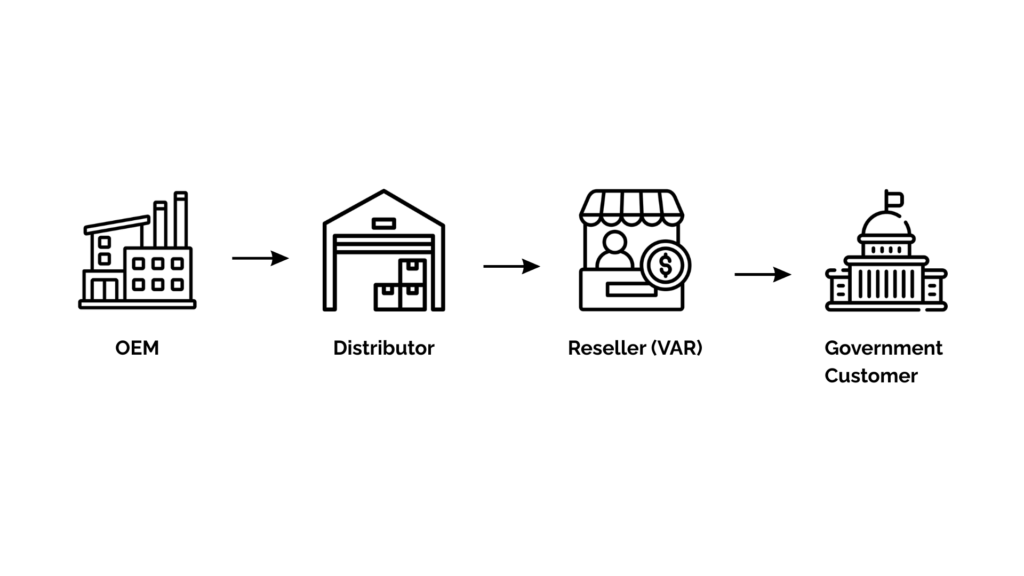
  3. Reseller / Value-Added Reseller (VAR): Smaller businesses often operate as resellers or Value-Added Resellers (VARs), selling or integrating OEM equipment within larger systems and adding services like installation, configuration, or training.

A typical flow might look like the following:  How OEM works

Understanding these relationship dynamics is crucial because your position in the supply chain determines your teaming strategy, pricing structure, and proposal approach.

How Contractors Can Identify OEM Requirements in Solicitation

Manually reading through hundreds of pages of solicitation docs can make identifying OEM mentions a time-consuming task.

That’s where OppyHound AI-powered platform becomes invaluable.

With OppyHound’s Deep Dive feature, contractors can:

  • Search solicitation documents for OEM mentions or brand specifications
  • Extract key compliance sections referring to “OEM-approved” or “equivalent” clauses
  • Generate detailed summaries highlighting sourcing or certification requirements

This allows your team to determine whether OEM partnerships are mandatory and plan your sourcing strategy early in the proposal process.

How to Find and Engage OEMs for Government Contracts

Building relationships with the right OEMs can significantly strengthen your position in the federal marketplace. Here are five steps to connect with OEMs for federal contracts:

Step 1: Identify OEM Mentions in Opportunities

Use OppyHound’s keyword searchfor solicitations mentioning “OEM,” “manufacturer authorized,” or specific brand names.

Step 2: Verify OEM Status

Check manufacturer certifications, warranty policies, and past federal performance via USAspending.gov or FPDS.

Step 3: Build OEM Relationships Early

Reach out to OEM before RFP release dates. Early alignment ensures you can access technical documentation, reseller authorizations, and pricing support.

Step 4: Use Set-Asides Strategically

Many OEMs collaborate with small businesses for 8(a), HUBZone, SDVOSB or WOSB participation, helping both sides meet eligibility and diversity goals.

Common Challenges and Solutions in OEM Collaboration

While OEM partnerships offer significant advantages, contractors often face several challenges.

  1. Limited OEM access for small businesses can make it difficult to get authorized reseller status, particularly with major manufacturers who prefer established distributors; the solution is to build relationships early and highlight your socio-economic certifications, which many OEMs value for meeting their own diversity goals.
  2. Pricing constraints present another hurdle, as OEMs may have fixed price lists or high minimum order quantities that strain smaller contractors’ budgets; negotiating through master distributors or teaming partners can provide more flexible terms.
  3. Documentation gaps frequently emerge when technical specifications or compliance letters are missing or difficult to obtain; using AI-powered tools to extract and track OEM references across multiple documents can streamline this process and ensure nothing falls through the cracks.
Challenge Impact Solution
Limited OEM Access for Small Businesse Difficult to get authorized reseller status Build relationships early and highlight socio-economic certifications
Pricing Constraint OEMs may have fixed price lists or high minimum order quantities Negotiate through master distributors or teaming partners
Documentation Gaps Missing technical specs or compliance letters Use OppyHound’s AI Document Chat to extract and track OEM references across files

By anticipating these challenges and implementing strategic solutions, contractors can build more effective OEM partnerships that strengthen rather than complicate their federal contracting efforts.

Your Next Move

OEMs are more than suppliers; they’re strategic partners in the federal contracting ecosystem. Understanding how OEMs influence solicitation requirements and how to align with them can significantly boost your proposal credibility and win potential.

OppyHound helps contractors identify OEM mentions and analyze technical requirements in one platform.

Start your free trial today to discover OEM-linked opportunities faster and bid smarter in the GovCon market.

FAQs

  1. What does OEM stand for in government contracting?
    OEM stands for Original Equipment Manufacturer, a company that makes components or systems used in another organization’s final deliverable to the government.
  2. Can small businesses partner with OEMs?
    Many OEMs work with small business resellers, distributors, or integrators under SBA programs like 8(a), SDVOSB, WOSB, or HUBZone.
  3. How can I identify OEM requirements in a solicitation?
    Use OppyHound’s AI-powered chat to highlight OEM or brand-specific clauses instantly.
  4. Are OEM parts required for every contract?
    Not always. Some solicitations allow “OEM equivalent” products if they meet performance and quality benchmarks.

5 Rookie Mistakes in Government Contract Bids And How to Avoid Them

Winning a government contract bid is every small business’ big break, but it’s also a high-stakes game where even minor mistakes can disqualify you before evaluators finish reading page one.

Government solicitations are complex, time-bound, and full of compliance requirements. The difference between a winning and a rejected bid often is a result of attention to detail, not just technical capability. That’s why understanding what not to do is just as important as knowing how to write a great proposal.

In this post, we’ll break down five rookie mistakes new federal contracting companies make and how you can avoid them using AI-powered tools like OppyHound, designed to simplify how you find, analyze, and respond to government opportunities.

Mistake #1: Ignoring Difficult to Find Details in Solicitation Documents

Many teams rush through RFPs and RFQs, focusing only on the summary and Sections L (Instructions), M (Evaluation Factors), and C (Statement of Work). They read the cover page, skim the statement of work, check the deadline, and dive straight into writing. But crucial requirements often hide in attachments such as compliance forms, past performance templates, security clearance specifications, and RFP sections such as Section G, Contract Administration Data or Section H, Special Contract Requirements.

These aren’t optional add-ons. They’re mandatory elements that evaluators use to determine if your proposal even qualifies for scoring. A proposal that doesn’t address every requirement will be marked as non-responsive and eliminated before technical evaluation begins.

Skipping those attachments or sections can mean instant rejection. The problem intensifies when solicitations include multiple amendments, and Q & A (Questions and Answers). Each amendment might add new attachments, modify existing requirements, or add Q & A documents / spreadsheets. If you’re working from an earlier version, you’re essentially bidding on a different contract.

Some commonly overlooked requirements include wage determination schedules, quality assurance surveillance plans (QASPs), facility clearance (FCL) requirements, small business subcontracting plans, and specific formatting requirements that differ from standard guidelines.

How OppyHound Can Help:

Use OppyHound’s AI-powered Document Intelligence to chat directly with solicitation documents, amendments, and Q&A spreadsheets, and instantly extract details like scope of work, key deadlines, evaluation criteria, compliance clauses, updated requirements or answers, and FCL requirements. No more manual skimming, OppyHound surfaces what actually matters, so you never miss a deal-breaking detail. A great example is when Q & A documents or spreadsheets are issued. Many of these have over 1,000 questions and answers, with many being duplicative. Bidders can use OppyHound’s ‘ask the document questions’ capability to find specific answers to topic areas, saving time and ensuring accuracy in thier proposals.

Mistake #2: Submitting a Proposal That’s Technically Non-Compliant

Government evaluators don’t score creativity; they score compliance and a compelling approach. Even a small formatting or submission error can disqualify an otherwise excellent proposal. Using the wrong NAICS code, submitting files in the wrong format or wrong naming convention, missing page limits, or failing to include required certifications are all common mistakes.

The evaluation process is designed to be objective and defensible. Contracting officers follow strict protocols. If the solicitation says “12-point font minimum,” a proposal in 11-point font creates a compliance issue that is a deficiency, regardless of content quality.

Another compliance challenge involves eligibility requirements. Bidding on a contract with a Service-Disabled Veteran-Owned Small Business (SDVOSB) set-aside when you don’t hold that certification wastes everyone’s time and damages your reputation with that agency.

How OppyHound Can Help: 

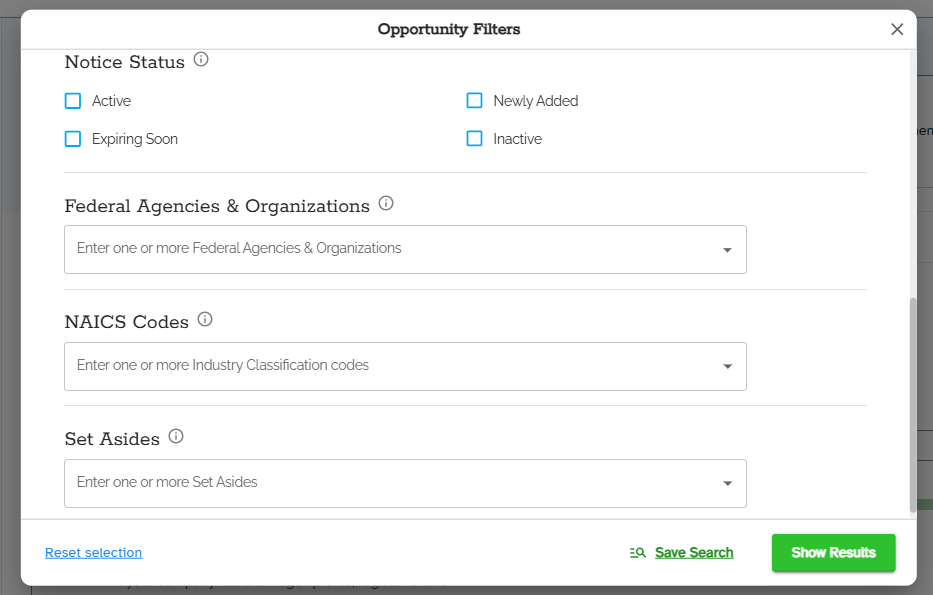
Leverage Opportunity Discovery filters to find bids that align exactly with your capabilities — filtered by NAICS codes, agencies, set-asides, and even labor categories. This ensures you’re bidding only on what you’re eligible to bid.

Mistake #3: Chasing Every Opportunity (Without a Strategy)

If you think more bids mean more chances to win, you are wrong. Spreading limited resources too thin means losing focus, quality, and credibility with contracting officers.

Each proposal requires significant investment: staff time, past performance documentation, teaming agreements, pricing analysis, and separate reviews. When you bid on everything, you end up submitting mediocre proposals that fail to demonstrate a deep understanding of the requirement. Taking time prior to a proposal to meet with the government is essential to understand the government’s needs, pain points, and intangibles such as delivery challenges or quality assurance.

Contracting officers notice patterns. If you consistently submit proposals that feel generic or miss the mark, they’ll remember. Government contracting is a relationship business built on demonstrated competence and reliability.

Strategic bidding means evaluating each opportunity against clear criteria:

  • Does it match your core capabilities?
  • Can you assemble a credible team to cover all requirements in the PWS or SOW?
  • Do you and/or your team have relevant past performance?

The best contractors maintain win rates of 30-50% because they bid selectively on opportunities they can genuinely win and execute well.

How OppyHound Can Help:

Build a focused Watchlist and track updates only for high-fit solicitations. When changes happen, OppyHound alerts you instantly, so your team stays responsive, not reactive.

Mistake #4: Writing Like You’re Talking to a Commercial Client

Government proposals are not marketing decks; they are compliance documents describing a bidder’s approach to meet requirements. Reviewers prioritize precision, structure, and adherence to specified requirements over promotional claims. For example, do not simply say you will do a requirement, but, instead, describe how you will meet or exceed the requirement, using a people, processes, tools description, with an example of how your team has done similar work successfully it in a past contract.

Commercial proposals succeed by painting a vision and building excitement. Government proposals succeed by methodically addressing every evaluation criterion with concrete evidence. Every statement needs support: past performance examples, staff qualifications, process descriptions (approach), or quantifiable metrics. Evaluators score based on how well you describe your approach to specific requirements, not on how exciting your solution sounds.

The structure matters, too. If the solicitation lists five evaluation factors in a specific order, your proposal should address them in that exact order with clear section headings. Make it easy for evaluators to find your answers and check boxes on their scoresheets. A great approach is to identify the requirement you are addressing in parenthesis in the title of the section (e.g., SOW 3.4.5)

How OppyHound Can Help:

Use OppyHound’s Deep Dive Reports to quickly understand what evaluators care about, and you can tailor your proposal accordingly. The reports highlight key insights like evaluation criteria, deadlines, and performance expectations, giving you a clear direction.

Mistake #5: Missing Last-Minute Updates or Amendments

Amendments can drop anytime, and if you miss one, your proposal might become outdated or incomplete overnight. Government agencies regularly issue amendments to clarify requirements, extend deadlines, answer questions, or add/delete requirements.

Some amendments are minor: fixing typos or extending the deadline by a few days. Others are substantial: changing technical requirements, changing the submission date, adding wage determinations, or modifying the scope of work. All amendments are legally binding and must be acknowledged in your proposal.

Missing an amendment that changes a key requirement means your proposal addresses the wrong specification. Missing an amendment with answers to pre-proposal questions means you are operating with incomplete information while your competitors have clarity.

How OppyHound Can Help:

With OppyHound’s ‘opportunity watchlist’ capability, you’ll get notified instantly when a solicitation changes from updated deadlines to new attachments. No more manual refreshing or missed updates.

Winning Starts with Awareness

Avoiding rookie mistakes isn’t just about experience; it’s about using the right intelligence. AI solutions like OppyHound help you stay compliant, efficient, and ahead of competitors by turning complex solicitations into clear, actionable insights.

Ready to bid smarter?

Sign up for free on OppyHound and start discovering, analyzing, and tracking government opportunities all in one place.

FAQs

Q1. What’s the most common mistake in government contract proposals? Not fully reviewing all solicitation attachments. Many bidders overlook crucial compliance clauses hidden in secondary documents.

Q2. How can OppyHound help small businesses with government proposals? OppyHound simplifies the entire process — from opportunity search to bidding analysis — using AI-powered document insights and real-time updates.

Q3. Can I use OppyHound to track multiple solicitations at once? Yes! You can create a Watchlist to track multiple bids and receive automatic alerts for changes or new updates.

The Truth About CMMC 2.0

The DoD’s CMMC 2.0 final rule took effect Nov. 10, 2025, but this date marks the start of a phased implementation, not an immediate cut-off. It launches a 3‑year rollout of CMMC requirements across DoD contracts.

In Phase 1 (Nov. 2025 – Nov. 2026), new solicitations will begin to include CMMC clauses (DFARS 252.204‑7021/7025) requiring CMMC Level 1 or 2 status, but primarily via self-assessment. In other words, contractors handling Federal Contract Information or CUI can compete in Phase 1 by completing the required self-assessment and annual affirmation, formal certification by Nov. 10, 2025, is not mandatory.

CMMC 2.0 Phases

The DoD emphasized that during the first 12 months, it will “primarily focus on self-assessments”. The new rule simply allows contracting officers to start including CMMC requirements in awards, it does not immediately disqualify non-certified companies.

  • Phase  1 (Nov  10, 2025 – Nov  9, 2026): Contracts may require Level 1 or Level 2 (Self) CMMC status. Offerors are expected to complete the self-assessment and post scores in Supplier Performance Risk System (SPRS). DoD may also include Level 2 Certified Third-Party Assessment Organization (C3PAO) clauses at its discretion.
  • Phase  2 (Nov  10, 2026 – Nov  9, 2027): Contracts will begin to require Level 2 (C3PAO) certification for applicable work. DoD may delay the Level 2 certification requirement to a contract’s option period or start including Level 3 for some programs).
  • Phase  3 (Nov  10, 2027 – Nov  9, 2028): Contracts will require Level 3 (DIBCAC) certification for applicable work, which is the Government’s Defense Industrial Base Cybersecurity Assessment Center (DIBCAC). All Level 2 (C3PAO) requirements apply as before.
  • Phase 4 (Full Implementation, Nov 10, 2028 onward): All applicable DoD solicitations and contracts (except Commercial Off the Shelf (COTS)-only) will include the appropriate CMMC level requirement as a condition of award. By this point, CMMC is fully integrated in the acquisition process.

These phases (outlined in 32 CFR §170.3(e) mean there is an extended ramp-up period. In Phase 1, because DoD will accept self‑attested compliance, companies that are not yet formally certified can still win new contracts (so long as they meet the self-assessment requirements and have a current SPRS score).

In practical terms, mid-Nov. 2025 was not a hard “drop-dead” deadline for certification. It was simply when agencies started adding the CMMC clause to solicitations.

Contract Impact

New vs. Existing Awards:

The key rule is that once a solicitation includes the CMMC clause, an offeror must have a current CMMC status at the required level to be eligible. (The final DFARS language makes CMMC status a condition of award, and contracting officers will verify compliance in SPRS).

In Phase 1, that means offerors must have a valid Level 1 or Level 2 (Self) status and affirmation. If a contract in Phase 1 requires Level 2 (Self), a company can simply submit its SPRS self-score and annual affirmation. Only in Phases 2–3 will certify Level 2 or Level 3 status become a prerequisite for award on covered contracts.

Importantly, existing contracts will not be automatically canceled if a vendor is not certified. Current awards (with only DFARS 7012/NIST SP 800-171 clauses) generally continue under the old terms.

The new CMMC clauses apply when a contract is awarded, extended, or modified after Nov 10, 2025. DoD’s rules allow contracting officers to add the CMMC clause by contract modification at their discretion. This means a company performing under an existing contract without CMMC can still complete that work, but if it later pursues a renewal, extension, or new award that includes a CMMC requirement, it will need to meet that requirement at that time.

In short: no automatic termination of current work, but any contract action in Phases 1–4 that incorporates CMMC clauses will require the contractor to have (or obtain) the specified CMMC status and affirmation.

Implications for Contractors

The phased rollout is deliberately gradual. Vendors who handle FCI/CUI should treat Phase 1 as an opportunity, not a crisis. In 2025–26, you can still compete on new solicitations by completing the required self-assessments and affirming compliance. But do not delay: the DoD expects contractors to use this transition period to get in order.

Identify which CMMC level your business will need, conduct the self-assessment now, and (for those needing Level 2 or 3) begin preparing for official certification. DoD and its CMMC program office provide free resources (e.g. Project Spectrum training) to help contractors meet the new requirements.

Why It Matters

Compliance with CMMC 2.0 is critical for any vendor’s growth in the DoD market. Cybersecurity is now a contractual requirement, not just guidance. Over the next three years, CMMC will become fully embedded in defense procurement.

Eventually, all contracts involving FCI/CUI will demand it. Being proactive about CMMC will keep your business eligible for DoD work and help protect your own systems and data. In DoD’s words, CMMC is a “critical safeguard” for the defense supply chain.

Companies that start early can leverage the ramp-up period as a runway: they can continue fulfilling contracts now while strategically investing in the cybersecurity improvements needed for future awards.

Key Takeaways for Vendors

Mid‑November 2025 was not an abrupt cutoff but the start of Phase 1 of a 3‑year CMMC schedule. During 2025–26, Level 1 and 2 self-assessments are accepted in contracts, so uncertified firms can still win and perform work by attesting compliance. Phases 2 and 3 (Nov 2026 and 2027) will add certified Level 2 and Level 3 requirements. Existing contracts without the CMMC clause remain valid until modified.

However, by late 2028 (Phase  4) all applicable DoD contracts will require the appropriate CMMC level. Vendors should use this ramp-up to align their cybersecurity: review NIST SP 800-171 controls, self-assess today, and plan for formal assessments as needed. Taking early action will ensure eligibility for awards and support a resilient growth strategy in the DoD market.

Frequently Asked Questions (FAQs)

1. Is November 10, 2025, a hard deadline for CMMC certification?
No. It’s the official start of the CMMC 2.0 rollout (Phase 1), but not a disqualification deadline. Self-assessments are accepted in most new contracts during this phase.

2. Can my company still win DoD contracts without CMMC certification?
Yes, during Phase 1 (Nov 2025–Nov 2026), most contracts only require a self-assessment for Level 1 or 2, not formal certification.

3. What happens to my current DoD contracts if I’m not CMMC certified yet?
You won’t lose existing contracts unless they’re modified to include CMMC clauses. The requirements mainly apply to new awards, extensions, or modifications.

4. What’s the difference between CMMC Level 1 and Level 2?
Level 1: 15 basic cybersecurity practices; self-assessment required

Level 2: 110 NIST 800-171 controls; starts with self-assessment, moves to third-party (C3PAO) certification

5. When does CMMC Level 2 certification become mandatory?
Beginning in November 2026, most Level 2 contracts will require C3PAO certification instead of self-assessment.

What are NAICS Codes? 2026 Guide for Small Business Contracts

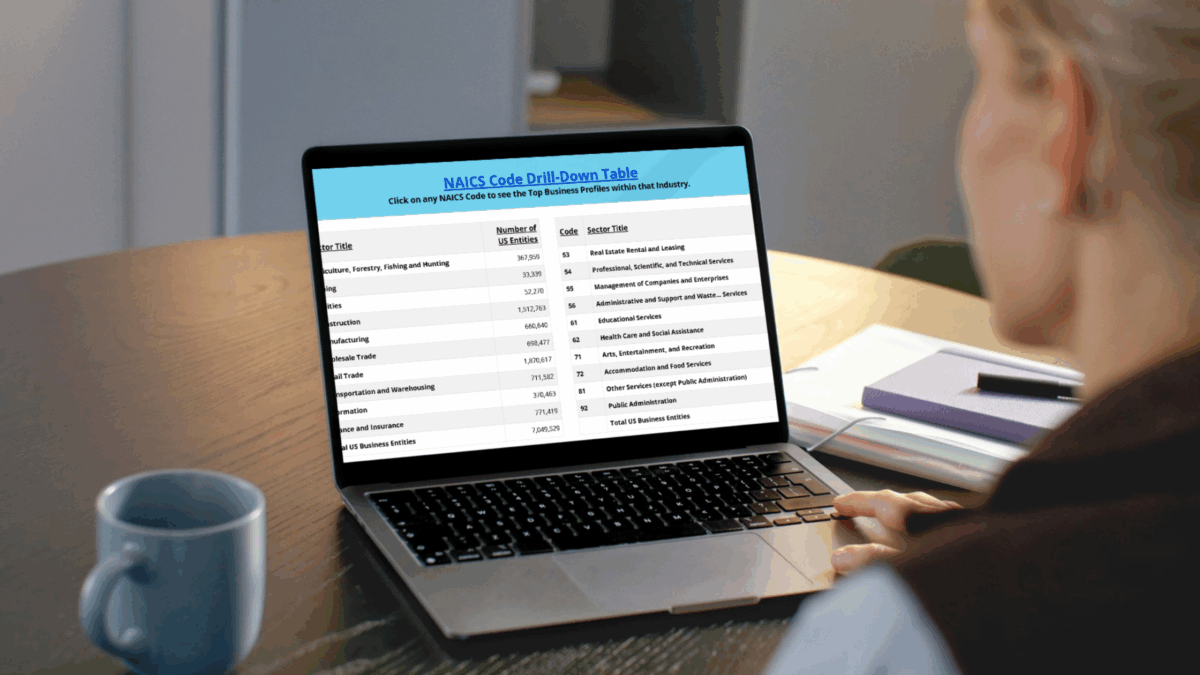
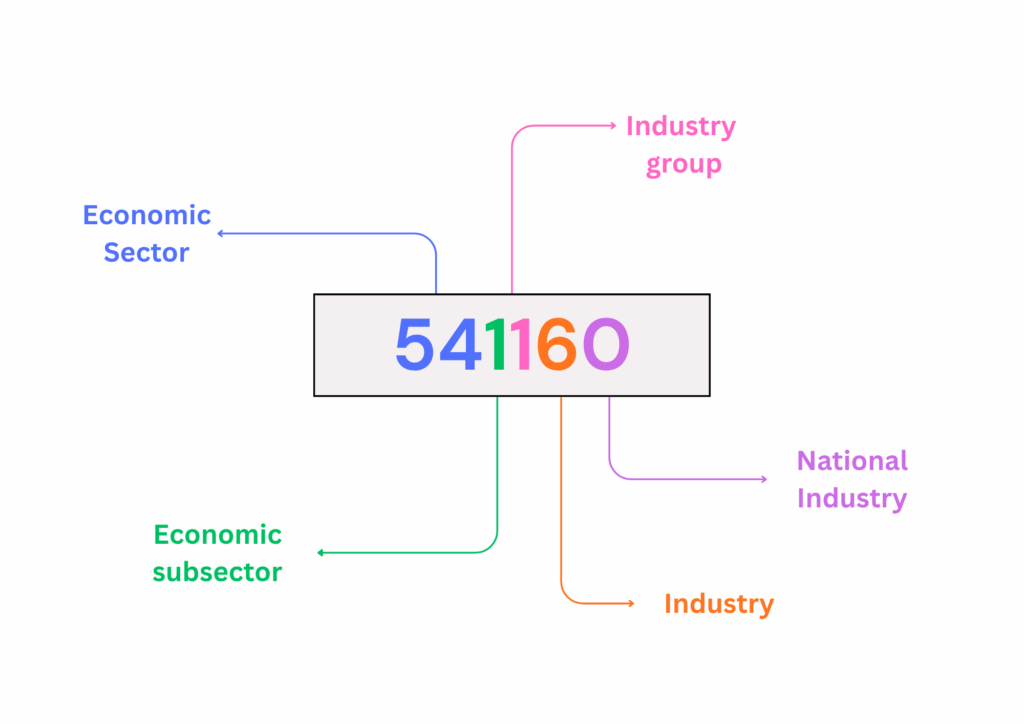
  1. Finding the right government contract starts with understanding your NAICS codes. The North American Industry Classification System (NAICS) is a key part of how federal agencies categorize and solicit work. Every contract opportunity published by a federal agency is assigned a NAICS code, a six-digit industry identifier that determines:
  • What kind of work the solicitation covers
  • Whether you qualify as a small business
  • Which set-aside programs you can compete under

For small businesses, choosing the correct NAICS codes and using them to filter opportunities is one of the most practical ways to focus efforts and compete effectively in the federal marketplace.

In this blog we will walk you through how NAICS codes work and how to use them to search for government contracts that align with your capabilities.

What are NAICS codes?

NAICS is a standardized system used by federal agencies to classify businesses based on their economic activity. Every industry sector has an associated six-digit NAICS code, helping agencies organize data, manage procurements, and ensure that businesses compete fairly within their appropriate industries.

For example:

  • 541611 – Administrative Management and General Management Consulting Services
  • 236220 – Commercial and Institutional Building Construction
  • 541512 – Computer Systems Design Services

Why NAICS Codes Matter for Small Businesses

In federal procurement, NAICS codes do far more than categorize industries. They define how competition works and who qualifies for small business advantages.

Here’s why they’re essential for your government contracting strategy:

1. Targeted Contract Search

When you search for opportunities using your NAICS code, you immediately filter solicitations to those relevant to your line of work. Instead of wading through thousands of unrelated opportunities, you can focus only on the contracts that match your expertise.

2. Small Business Size Determination

The U.S. Small Business Administration (SBA) uses NAICS codes to determine whether your company qualifies as a small business. Each code is linked to a size standard either by annual revenue or number of employees.

Example:

  • Under NAICS 541611 (Management Consulting), a business may be considered small if it earns less than an average of $21.5M in annual receipts over the last five years.
  • Under NAICS 512230 (Music Publishers) the small business size is 900 employees or less.

Your eligibility for small business programs and your ability to bid on certain contracts depends on staying within these limits.

3. Set-Aside Contract Eligibility

Set-aside programs like 8(a), WOSB, HUBZone, or SDVOSB are all tied to NAICS-based size standards. Using the right code ensures your business appears in searches when agencies are sourcing for socioeconomic vendors under those programs.

4. Proposal Compliance and Accuracy

Submitting a proposal under the wrong NAICS code can lead to automatic disqualification. Every solicitation specifies its primary NAICS code, and if that primary NAICS code is not listed in your SAM.gov entity page, your proposal will be immediately disqualified.

5. Market Research and Positioning

NAICS codes power tools like USAspending.gov and FPDS.gov, which organize historical federal spending by industry. You can analyse which agencies buy your services, how much they spend, and who your top competitors are, all by filtering with your NAICS code.

Learn how to read and respond to a government solicitation 

How to Identify the Right NAICS Code for Your Business

If you’re new to government contracting or unsure which NAICS code fits best, here’s how to find the right one:

1. Use the Official SBA or Census Lookup Tools

Go to the U.S. Census Bureau NAICS Search page and enter keywords describing your primary services. Review the list of six-digit codes and their definitions to find the most accurate match.

2. Check Past Contracts and Competitors

Visit USAspending.gov or SAM.gov and search for similar businesses or contract types. Note which NAICS codes appear most frequently, that’s a good indicator of how your industry is classified.

Also, you can download the “U. S. Small Business Administration Table of Small Business Size Standards Matched to North American Industry Classification System Codes PDF and use the search function within the PDF to find specific NAICS codes or to find your core capabilities and their associated NAICS codes.

3. Review Your SAM Registration

Log into your SAM.gov profile and ensure your Primary NAICS Code reflects your main business activity. You can also list secondary codes for additional services you offer.

Tip: Many businesses qualify under multiple NAICS codes. If you offer both construction and design services, for instance, you can track both under your SAM profile to maximize visibility.

Check out our guide on how to register and prepare your business for government contracting

Search for Opportunities in OppyHound with NAICS codes

Once you’ve identified your NAICS codes, you can use them across our platforms to narrow your contract opportunities search.

OppyHound’s Basic Search lets you enter NAICS codes to:

  • Filter opportunities by industry-specific solicitations
  • Businesses often qualify under more than one NAICS code, track all that apply.
  • Combine NAICS code filters with small business programs (like 8(a), WOSB) to discover tailored opportunities.
  • Save searches and set alerts for matching future opportunities

Search Opportunity Filters

Note: OppyHound visuals in this blog are subject to change as the platform is regularly updated and improved.

Understanding the NAICS Code Structure

Every NAICS code has six digits. Each pair adds more detail:

Digits Meaning Example (541512)
First two Economic Sector 54 – Professional, Scientific, & Technical Services
Third Subsector 541 – Professional, Scientific, & Technical Services
Fourth Industry Group 5415 – Computer Systems Design
Fifth NAICS Industry 54151 – Computer Systems Design and Related Services
Sixth National Industry 541512 – Computer Systems Design Services

Understanding this structure helps you browse industries more efficiently and locate related codes for your service lines.

NAICS Codes by Sector

Here’s a quick look at major sectors and examples relevant to small businesses:

Sector Industry Examples Common Small Business NAICS Codes
23 Construction 236220 – Commercial & Institutional Building Construction
31-33 Manufacturing 332710 – Machine Shops
42 Wholesale Trade 423430 – Computer & Software Merchant Wholesalers
51 Information Technology 518210 – Data Processing & Hosting Services
54 Professional Services 541611 – Management Consulting
56 Administrative Support 561110 – Office Administrative Services
62 Health Care & Social Assistance 621111 – Offices of Physicians
81 Other Services 811212 – Computer & Office Machine Repair

How to Use NAICS Codes for Strategic Market Research

Your NAICS code can do more than filter contracts; it can help you understand where your opportunities truly lie.

1. Track Federal Spending

Visit USAspending.gov and use your NAICS code to explore:

  • Which agencies buy your services
  • Average contract sizes
  • Top competitors and awardees

2. Analyze Industry Trends

Use USAspending.gov and FPDS.gov to research historical awards by NAICS codes to understand trends like what agencies are buying, how much they are spending, prime winners, and small business share. Use Acquisition Gateway’s forecast tool and market research resources to complement this with forward‐looking analysis to understand what agencies say they will buy, category strategies, buying trends.

3. Plan Partnerships and Subcontracts

Knowing your NAICS category makes it easier to find teaming partners and prime contractors who regularly win in your industry segment.

Common Mistakes to Avoid

  • Using the Wrong NAICS Code: Even a small mismatch between your proposal and the solicitation’s NAICS code can lead to rejection.
  • Ignoring Secondary Codes: Many businesses focus only on their primary code and miss opportunities under other relevant codes. Most companies list several NAICS codes in SAM.gov to cover all their products and services; make sure you list them all too.
  • Not Updating SAM Profiles: Outdated NAICS listings can affect your eligibility or visibility in searches.

The Future of NAICS Codes Beyond 2026

The NAICS system is revised every five years to reflect changes in the economy and emerging industries. The 2022 version is currently in use, but the next revision, NAICS 2027, is expected to be released in late 2026.

Possible updates may include:

  • New codes for AI and data-driven services
  • Expanded categories for green and sustainable technologies
  • Adjusted size standards reflecting inflation and industry growth

Until then, businesses should continue using NAICS 2022 codes for all registrations and proposals.

Keep an eye on the Federal Register and Census Bureau’s NAICS site for announcements. Early awareness gives your business a headstart in adapting registrations and targeting new sectors.

Free Tools and Resources

You don’t need paid subscriptions to find your codes, these free tools can help:

  • Census NAICS Search – The official government lookup tool.
  • SBA Size Standards Tool – Confirms whether you qualify as a small business.
  • The U. S. Small Business Administration Table of Small Business Size Standards Matched to North American Industry Classification System (NAICS) Codes Document – A downloadable PDF document that lists all NAICS codes and their associated size values.
  • USAspending.gov – Analyze historical awards by NAICS.
  • SAM.gov – Review your NAICS registration and active opportunities.
  • OppyHound – Search, filter, and analyze contract opportunities by NAICS code.

Use the Right NAICS Codes to Win More Government Contracts

NAICS codes are more than standard classifications; they’re the backbone of how federal agencies define, search, and award contracts. For small businesses, understanding and using them effectively can mean the difference between chasing every opportunity and focusing on the ones that truly fit.

By aligning your business profile, proposals, and market research around your correct NAICS codes, you can target opportunities that match your expertise and size while saving time and improving your win rate.

Simplify your contract search with smart NAICS code matching on OppyHound. Sign up for free and start finding government contracts that align with your NAICS codes and business strengths.

FAQs

1. What is a NAICS code and why does it matter for small businesses?
A NAICS code (North American Industry Classification System code) identifies the primary business activity of a company. For small businesses, it’s essential because federal agencies use NAICS codes to determine eligibility for small business set-asides and to match contractors with relevant government contract opportunities.

2. How do I find my NAICS code?
You can find your NAICS code by visiting the official NAICS.gov website and entering a keyword that describes your business activity.

3. Can a business have more than one NAICS code?
Yes. Many businesses operate in multiple industries, so they can have more than one NAICS code. However, you’ll need to identify your primary NAICS code , the one that represents your main line of business for registration on SAM.gov and when bidding on contracts.

4. How are NAICS codes used in government contracts?
Federal agencies use NAICS codes to classify contracts by industry and determine small business size standards. When you search for federal contract opportunities, your NAICS code ensures that you’re viewing bids that align with your business capabilities.

5. What are the most common NAICS codes for small business contracts in 2026?
Some of the top NAICS codes for small businesses in 2026 include:

  • 541512 – Computer Systems Design Services
  • 541611 – Administrative Management & Consulting
  • 236220 – Commercial and Institutional Building Construction
  • 541330 – Engineering Services
  • 561210 – Facilities Support Services