In the government contracting (GovCon) world, artificial intelligence (AI) is quietly reshaping how companies search, evaluate, and compete for opportunities. From analyzing past spending data to predicting upcoming solicitations, AI tools are helping contractors move faster and make better decisions.
For small businesses and growing GovCon teams, finding the right AI-powered solution is no longer optional; it’s a strategic edge. The right tools can simplify compliance, reduce manual errors, and help your proposals stand out in a crowded field.
In this blog, we’ll explore five ways to use AI solutions for GovCon and how platforms like OppyHound are helping contractors streamline the entire process.
Most contractors start their search on SAM.gov, but that’s only part of the story. AI-driven platforms can scan beyond public listings, analyze agency forecasts, and surface early opportunities that match your NAICS codes, past performance, and core capabilities.
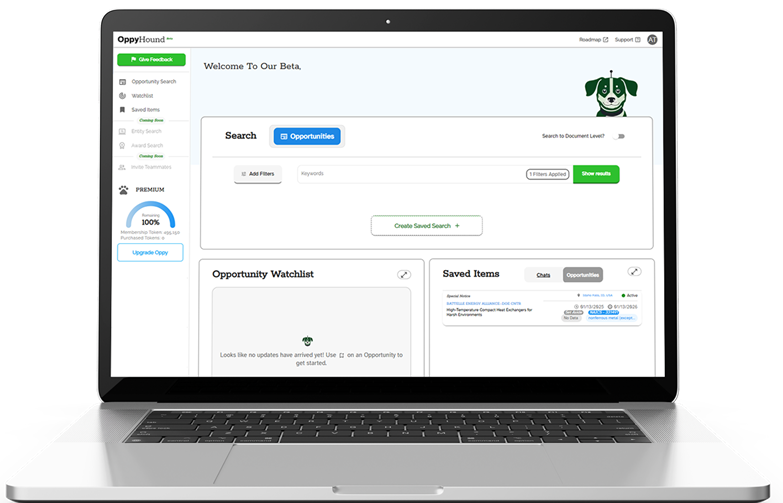
For instance, OppyHound uses natural language search and filtering to help you find relevant opportunities without wading through hundreds of irrelevant opportunities. You can filter contracts by industry, agency, or contract type and even track upcoming solicitations when they appear on SAM.gov.
Once you’ve found the opportunity, the challenge is parsing the heavy documentation.
Government solicitations are dense, technical, and often hundreds of pages long. Manually identifying “shall,” “must,” and “should” clauses can take hours and missing even one can make a proposal non-compliant.
AI tools built for GovCon automate this process. They extract requirements, flag key deliverables, and even create a preliminary compliance checklist.
With OppyHound’s Deep Dive feature, contractors instantly extract critical requirements, deadlines, and evaluation factors within solicitation documents through a list of pre-determined questions developed by industry experts. This not only accelerates your review process for a bid/no bid decision, but it also reduces human error, ensuring your team understands accurately what the government is actually asking for.
With requirements extracted, you still need to craft a compelling narrative. Writing proposals is where many GovCon teams lose the most time. AI-driven drafting tools now help contractors generate structured outlines, build first drafts, and even reuse past proposal language, while maintaining compliance and consistency.
The pricing narrative is often where compliance breaks down. AI tools can align technical approach with cost assumptions, highlight inconsistencies, and ensure your numbers match your text. This helps you move faster and more confidently into submission.
Finally, AI doesn’t stop when the draft is done. It supports quality assurance, checks page counts, font sizes, mandatory forms, and monitors amendments.
Begin by documenting how your team currently discovers opportunities, reviews RFPs, drafts proposals, and submits. Identify bottlenecks such as manual review of attachments, rewriting boilerplate, and compliance oversights.
Choose the areas where AI provides quick wins: e.g., requirement extraction and compliance matrix generation. Implement AI for RFP ingestion and outline generation first.
Run a pilot on 3–5 solicitations. Track metrics like draft creation time, number of manual edits, and compliance errors detected. Use this data to build a business case for a wider rollout.
AI is powerful, but if left unchecked, it can introduce risk. Users need to ensure:
When evaluating AI solutions for government contracting, ask for these essential features:
It’s important to recognize that AI is not a silver bullet but a powerful tool when used responsibly.
OppyHound is designed for GovCon teams that want to combine AI power with human expertise. Here’s how our platform aligns to your bid lifecycle:
AI solutions for GovCon are not about replacing your proposal team; they’re about empowering them. When applied strategically, government contracting software can automate tedious tasks, reduce risk, and free your team to focus on what matters: developing winning strategies and differentiators.
If you’re ready to move beyond manual overload and bid with confidence, sign up for free on OppyHound. If you like what you see, subscribe to the $25 plan to use OppyHound’s advance search and purchase tokens as needed to run deep dives and ask documents questions. Find your next opportunity on OppyHound and get a summary in minutes because your time is your advantage.