For small businesses, choosing the correct NAICS codes and using them to filter opportunities is one of the most practical ways to focus efforts and compete effectively in the federal marketplace.
In this blog we will walk you through how NAICS codes work and how to use them to search for government contracts that align with your capabilities.
NAICS is a standardized system used by federal agencies to classify businesses based on their economic activity. Every industry sector has an associated six-digit NAICS code, helping agencies organize data, manage procurements, and ensure that businesses compete fairly within their appropriate industries.
For example:
In federal procurement, NAICS codes do far more than categorize industries. They define how competition works and who qualifies for small business advantages.
Here’s why they’re essential for your government contracting strategy:
When you search for opportunities using your NAICS code, you immediately filter solicitations to those relevant to your line of work. Instead of wading through thousands of unrelated opportunities, you can focus only on the contracts that match your expertise.
The U.S. Small Business Administration (SBA) uses NAICS codes to determine whether your company qualifies as a small business. Each code is linked to a size standard either by annual revenue or number of employees.
Example:
Your eligibility for small business programs and your ability to bid on certain contracts depends on staying within these limits.
Set-aside programs like 8(a), WOSB, HUBZone, or SDVOSB are all tied to NAICS-based size standards. Using the right code ensures your business appears in searches when agencies are sourcing for socioeconomic vendors under those programs.
Submitting a proposal under the wrong NAICS code can lead to automatic disqualification. Every solicitation specifies its primary NAICS code, and if that primary NAICS code is not listed in your SAM.gov entity page, your proposal will be immediately disqualified.
NAICS codes power tools like USAspending.gov and FPDS.gov, which organize historical federal spending by industry. You can analyse which agencies buy your services, how much they spend, and who your top competitors are, all by filtering with your NAICS code.
Learn how to read and respond to a government solicitation
If you’re new to government contracting or unsure which NAICS code fits best, here’s how to find the right one:
Go to the U.S. Census Bureau NAICS Search page and enter keywords describing your primary services. Review the list of six-digit codes and their definitions to find the most accurate match.
Visit USAspending.gov or SAM.gov and search for similar businesses or contract types. Note which NAICS codes appear most frequently, that’s a good indicator of how your industry is classified.
Also, you can download the “U. S. Small Business Administration Table of Small Business Size Standards Matched to North American Industry Classification System Codes” PDF and use the search function within the PDF to find specific NAICS codes or to find your core capabilities and their associated NAICS codes.
Log into your SAM.gov profile and ensure your Primary NAICS Code reflects your main business activity. You can also list secondary codes for additional services you offer.
Tip: Many businesses qualify under multiple NAICS codes. If you offer both construction and design services, for instance, you can track both under your SAM profile to maximize visibility.
Check out our guide on how to register and prepare your business for government contracting
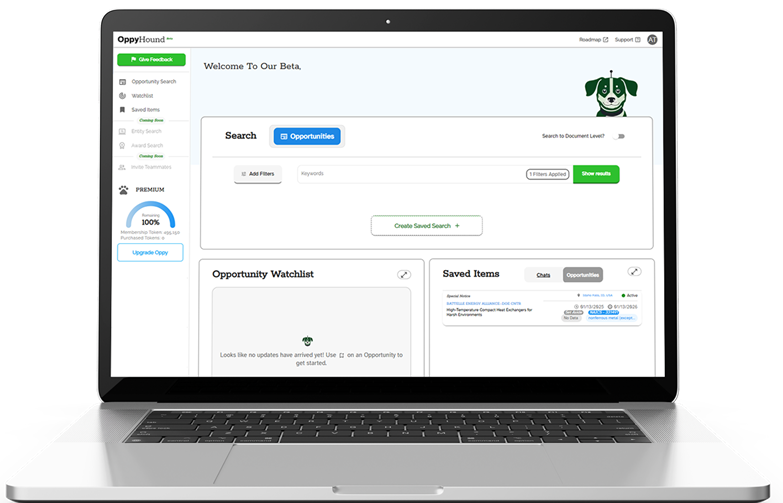
Once you’ve identified your NAICS codes, you can use them across our platforms to narrow your contract opportunities search.
OppyHound’s Basic Search lets you enter NAICS codes to:
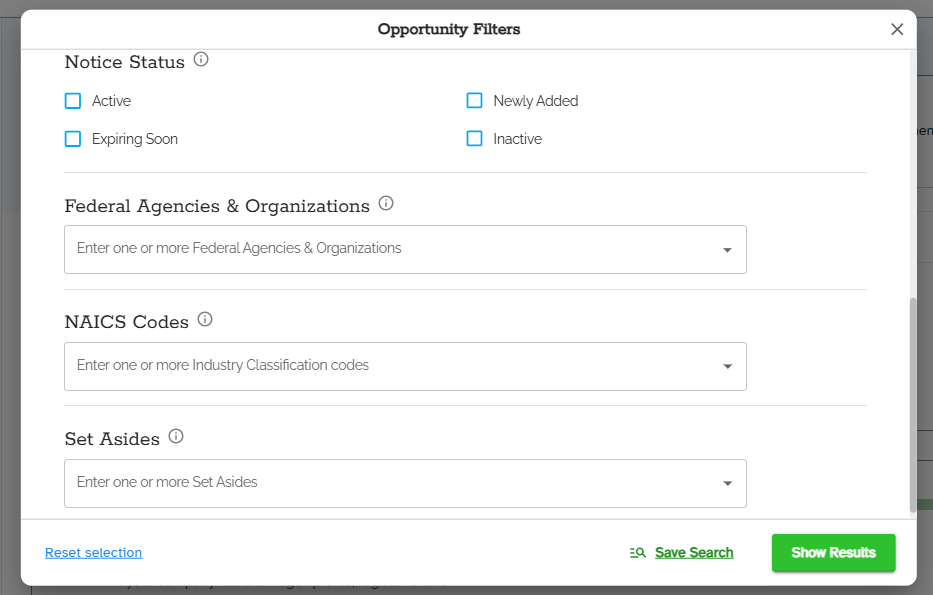
Note: OppyHound visuals in this blog are subject to change as the platform is regularly updated and improved.
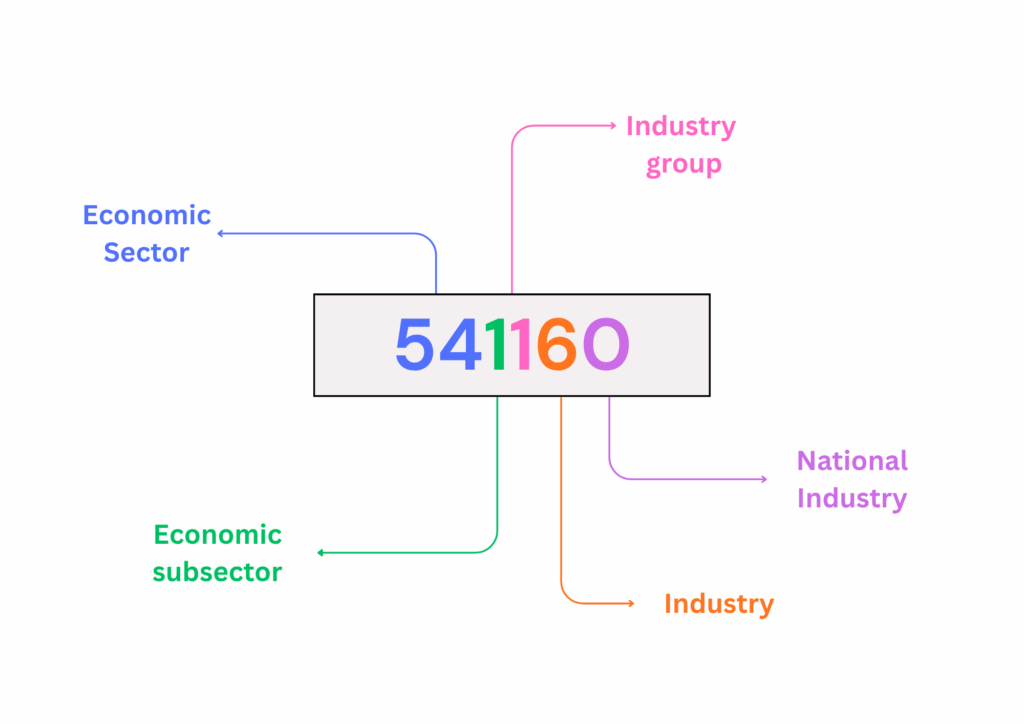
Every NAICS code has six digits. Each pair adds more detail:
| Digits | Meaning | Example (541512) |
| First two | Economic Sector | 54 – Professional, Scientific, & Technical Services |
| Third | Subsector | 541 – Professional, Scientific, & Technical Services |
| Fourth | Industry Group | 5415 – Computer Systems Design |
| Fifth | NAICS Industry | 54151 – Computer Systems Design and Related Services |
| Sixth | National Industry | 541512 – Computer Systems Design Services |
Understanding this structure helps you browse industries more efficiently and locate related codes for your service lines.
Here’s a quick look at major sectors and examples relevant to small businesses:
| Sector | Industry Examples | Common Small Business NAICS Codes |
| 23 | Construction | 236220 – Commercial & Institutional Building Construction |
| 31-33 | Manufacturing | 332710 – Machine Shops |
| 42 | Wholesale Trade | 423430 – Computer & Software Merchant Wholesalers |
| 51 | Information Technology | 518210 – Data Processing & Hosting Services |
| 54 | Professional Services | 541611 – Management Consulting |
| 56 | Administrative Support | 561110 – Office Administrative Services |
| 62 | Health Care & Social Assistance | 621111 – Offices of Physicians |
| 81 | Other Services | 811212 – Computer & Office Machine Repair |
Your NAICS code can do more than filter contracts; it can help you understand where your opportunities truly lie.
Visit USAspending.gov and use your NAICS code to explore:
Use USAspending.gov and FPDS.gov to research historical awards by NAICS codes to understand trends like what agencies are buying, how much they are spending, prime winners, and small business share. Use Acquisition Gateway’s forecast tool and market research resources to complement this with forward‐looking analysis to understand what agencies say they will buy, category strategies, buying trends.
Knowing your NAICS category makes it easier to find teaming partners and prime contractors who regularly win in your industry segment.
The NAICS system is revised every five years to reflect changes in the economy and emerging industries. The 2022 version is currently in use, but the next revision, NAICS 2027, is expected to be released in late 2026.
Possible updates may include:
Until then, businesses should continue using NAICS 2022 codes for all registrations and proposals.
Keep an eye on the Federal Register and Census Bureau’s NAICS site for announcements. Early awareness gives your business a headstart in adapting registrations and targeting new sectors.
You don’t need paid subscriptions to find your codes, these free tools can help:
NAICS codes are more than standard classifications; they’re the backbone of how federal agencies define, search, and award contracts. For small businesses, understanding and using them effectively can mean the difference between chasing every opportunity and focusing on the ones that truly fit.
By aligning your business profile, proposals, and market research around your correct NAICS codes, you can target opportunities that match your expertise and size while saving time and improving your win rate.
Simplify your contract search with smart NAICS code matching on OppyHound. Sign up for free and start finding government contracts that align with your NAICS codes and business strengths.
1. What is a NAICS code and why does it matter for small businesses?
A NAICS code (North American Industry Classification System code) identifies the primary business activity of a company. For small businesses, it’s essential because federal agencies use NAICS codes to determine eligibility for small business set-asides and to match contractors with relevant government contract opportunities.
2. How do I find my NAICS code?
You can find your NAICS code by visiting the official NAICS.gov website and entering a keyword that describes your business activity.
3. Can a business have more than one NAICS code?
Yes. Many businesses operate in multiple industries, so they can have more than one NAICS code. However, you’ll need to identify your primary NAICS code , the one that represents your main line of business for registration on SAM.gov and when bidding on contracts.
4. How are NAICS codes used in government contracts?
Federal agencies use NAICS codes to classify contracts by industry and determine small business size standards. When you search for federal contract opportunities, your NAICS code ensures that you’re viewing bids that align with your business capabilities.
5. What are the most common NAICS codes for small business contracts in 2026?
Some of the top NAICS codes for small businesses in 2026 include: