Winning a government contract bid is every small business’ big break, but it’s also a high-stakes game where even minor mistakes can disqualify you before evaluators finish reading page one.
Government solicitations are complex, time-bound, and full of compliance requirements. The difference between a winning and a rejected bid often is a result of attention to detail, not just technical capability. That’s why understanding what not to do is just as important as knowing how to write a great proposal.
In this post, we’ll break down five rookie mistakes new federal contracting companies make and how you can avoid them using AI-powered tools like OppyHound, designed to simplify how you find, analyze, and respond to government opportunities.
Many teams rush through RFPs and RFQs, focusing only on the summary and Sections L (Instructions), M (Evaluation Factors), and C (Statement of Work). They read the cover page, skim the statement of work, check the deadline, and dive straight into writing. But crucial requirements often hide in attachments such as compliance forms, past performance templates, security clearance specifications, and RFP sections such as Section G, Contract Administration Data or Section H, Special Contract Requirements.
These aren’t optional add-ons. They’re mandatory elements that evaluators use to determine if your proposal even qualifies for scoring. A proposal that doesn’t address every requirement will be marked as non-responsive and eliminated before technical evaluation begins.
Skipping those attachments or sections can mean instant rejection. The problem intensifies when solicitations include multiple amendments, and Q & A (Questions and Answers). Each amendment might add new attachments, modify existing requirements, or add Q & A documents / spreadsheets. If you’re working from an earlier version, you’re essentially bidding on a different contract.
Some commonly overlooked requirements include wage determination schedules, quality assurance surveillance plans (QASPs), facility clearance (FCL) requirements, small business subcontracting plans, and specific formatting requirements that differ from standard guidelines.
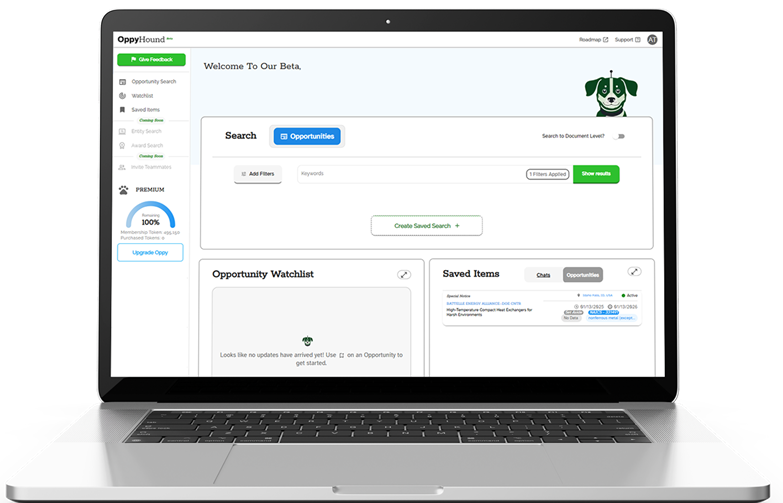
Use OppyHound’s AI-powered Document Intelligence to chat directly with solicitation documents, amendments, and Q&A spreadsheets, and instantly extract details like scope of work, key deadlines, evaluation criteria, compliance clauses, updated requirements or answers, and FCL requirements. No more manual skimming, OppyHound surfaces what actually matters, so you never miss a deal-breaking detail. A great example is when Q & A documents or spreadsheets are issued. Many of these have over 1,000 questions and answers, with many being duplicative. Bidders can use OppyHound’s ‘ask the document questions’ capability to find specific answers to topic areas, saving time and ensuring accuracy in thier proposals.
Government evaluators don’t score creativity; they score compliance and a compelling approach. Even a small formatting or submission error can disqualify an otherwise excellent proposal. Using the wrong NAICS code, submitting files in the wrong format or wrong naming convention, missing page limits, or failing to include required certifications are all common mistakes.
The evaluation process is designed to be objective and defensible. Contracting officers follow strict protocols. If the solicitation says “12-point font minimum,” a proposal in 11-point font creates a compliance issue that is a deficiency, regardless of content quality.
Another compliance challenge involves eligibility requirements. Bidding on a contract with a Service-Disabled Veteran-Owned Small Business (SDVOSB) set-aside when you don’t hold that certification wastes everyone’s time and damages your reputation with that agency.
Leverage Opportunity Discovery filters to find bids that align exactly with your capabilities — filtered by NAICS codes, agencies, set-asides, and even labor categories. This ensures you’re bidding only on what you’re eligible to bid.
If you think more bids mean more chances to win, you are wrong. Spreading limited resources too thin means losing focus, quality, and credibility with contracting officers.
Each proposal requires significant investment: staff time, past performance documentation, teaming agreements, pricing analysis, and separate reviews. When you bid on everything, you end up submitting mediocre proposals that fail to demonstrate a deep understanding of the requirement. Taking time prior to a proposal to meet with the government is essential to understand the government’s needs, pain points, and intangibles such as delivery challenges or quality assurance.
Contracting officers notice patterns. If you consistently submit proposals that feel generic or miss the mark, they’ll remember. Government contracting is a relationship business built on demonstrated competence and reliability.
Strategic bidding means evaluating each opportunity against clear criteria:
The best contractors maintain win rates of 30-50% because they bid selectively on opportunities they can genuinely win and execute well.
Build a focused Watchlist and track updates only for high-fit solicitations. When changes happen, OppyHound alerts you instantly, so your team stays responsive, not reactive.

Government proposals are not marketing decks; they are compliance documents describing a bidder’s approach to meet requirements. Reviewers prioritize precision, structure, and adherence to specified requirements over promotional claims. For example, do not simply say you will do a requirement, but, instead, describe how you will meet or exceed the requirement, using a people, processes, tools description, with an example of how your team has done similar work successfully it in a past contract.
Commercial proposals succeed by painting a vision and building excitement. Government proposals succeed by methodically addressing every evaluation criterion with concrete evidence. Every statement needs support: past performance examples, staff qualifications, process descriptions (approach), or quantifiable metrics. Evaluators score based on how well you describe your approach to specific requirements, not on how exciting your solution sounds.
The structure matters, too. If the solicitation lists five evaluation factors in a specific order, your proposal should address them in that exact order with clear section headings. Make it easy for evaluators to find your answers and check boxes on their scoresheets. A great approach is to identify the requirement you are addressing in parenthesis in the title of the section (e.g., SOW 3.4.5)
Use OppyHound’s Deep Dive Reports to quickly understand what evaluators care about, and you can tailor your proposal accordingly. The reports highlight key insights like evaluation criteria, deadlines, and performance expectations, giving you a clear direction.
Amendments can drop anytime, and if you miss one, your proposal might become outdated or incomplete overnight. Government agencies regularly issue amendments to clarify requirements, extend deadlines, answer questions, or add/delete requirements.
Some amendments are minor: fixing typos or extending the deadline by a few days. Others are substantial: changing technical requirements, changing the submission date, adding wage determinations, or modifying the scope of work. All amendments are legally binding and must be acknowledged in your proposal.
Missing an amendment that changes a key requirement means your proposal addresses the wrong specification. Missing an amendment with answers to pre-proposal questions means you are operating with incomplete information while your competitors have clarity.
With OppyHound’s ‘opportunity watchlist’ capability, you’ll get notified instantly when a solicitation changes from updated deadlines to new attachments. No more manual refreshing or missed updates.
Avoiding rookie mistakes isn’t just about experience; it’s about using the right intelligence. AI solutions like OppyHound help you stay compliant, efficient, and ahead of competitors by turning complex solicitations into clear, actionable insights.
Ready to bid smarter?
Sign up for free on OppyHound and start discovering, analyzing, and tracking government opportunities all in one place.
Q1. What’s the most common mistake in government contract proposals? Not fully reviewing all solicitation attachments. Many bidders overlook crucial compliance clauses hidden in secondary documents.
Q2. How can OppyHound help small businesses with government proposals? OppyHound simplifies the entire process — from opportunity search to bidding analysis — using AI-powered document insights and real-time updates.
Q3. Can I use OppyHound to track multiple solicitations at once? Yes! You can create a Watchlist to track multiple bids and receive automatic alerts for changes or new updates.